


Page 51 - ARNM-2-3
P. 51
Advances in Radiotherapy
            & Nuclear Medicine                                                  Image-guided interventional radiotherapy


            ultrasound guidance, real-time intraoperative planning,   planning poses challenges due to the presence of organ at
            and   high-precision  single-session  completion. 46,47    risk (OAR), including bones, blood vessels, trachea, and
            CT-guided techniques were applied in the field of 125I   intestines; (ii) Ultrasound-guided 125I seed implantation
            seed implantation in 2002. 44,46-52  The advantages of CT   for prostate cancer mainly relies on two-dimensional plans
            guidance  are  as  follows:  (i)  high-resolution  CT  scans;   with needles inserted parallelly, which could not apply to
            and (ii) unaffected by bone or gas interference, allowing   the other part of the body; (iii) The absence of a 3D planning
            treatment of lung cancer, head-and-neck, pelvis, and   system limits the ability to achieve 125I seed distribution
            spinal cord with 125I seed implantation. Nonetheless,   in 3D space across different locations of the carcinoma.
            certain drawbacks must be acknowledged: (i) Preoperative   In  2015,  Chinese  physicians  independently  spearheaded
                                                               the development of radioactive seed implant fixation and
            A                      B                           navigation brackets, in conjunction with 3D-printing non-
                                                               coplanar template (3D-PNCT) or 3D-PCT, which features
                                                               individual design and precise 125I seed implantation across
                                                               diverse tumor location. In addition, brachytherapy-TPS
                                                               (B-TPS) software compatible with 3D-PNCT or 3D-PCT
                                                               and computer planning algorithms have been developed
                                                               to ensure optimal 3D spatial distribution of radioactive
            C                      D                           125I seeds in the tumor targets. This approach enables
                                                               the fulfillment of preoperative target volume prescription
                                                               dose, while minimizing radiation exposure to OAR. As a
                                                               result of these advancements, 125I seed implantation has
                                                               achieved standardization and uniformity in the treatment
                                                               of solid tumors throughout the body, emerging as a widely
                                                               applicable standardized protocol and possessing significant
            Figure  6.  CT-sim guided HDR high-dose-rate after-loading
            brachytherapy. (A) Preoperative preparation; (B) Implantation applicator;   advantages in the management of recurrent head-and-neck
            (C) Target delineation and pre-planning; (D) Radiotherapy in high-dose-  cancer, lung cancer, pancreatic cancer, recurrent pelvic
            rate (HDR) after-loading room. Image provided by author.  carcinoma, soft tissue tumors, and other conditions. 53-60


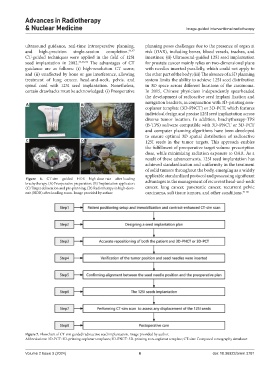
            Figure 7. Flowchart of CT-sim guided radioactive seed implantation. Image provided by author.
            Abbreviations: 3D-PCT: 3D-printing coplanar templates; 3D-PNCT: 3D-printing non-coplanar template; CT-sim: Computed tomography simulator.


            Volume 2 Issue 3 (2024)                         6                              doi: 10.36922/arnm.3781

