


Page 35 - ARNM-2-4
P. 35
Advances in Radiotherapy
            & Nuclear Medicine                                                       3D-PT-assisted CT-guided  I RSI
                                                                                                        125


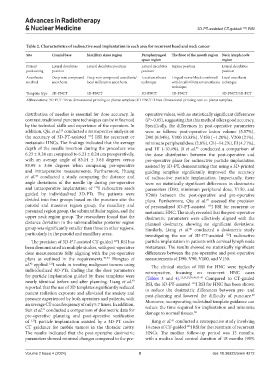
            Table 2. Characteristics of radioactive seed implantation in each area for recurrent head and neck cancer
            Site       Cranial base   Maxillary sinus region  Parapharyngeal   The floor of the mouth region Neck lymph node
                                                             space region                      region
            Patient    Lateral decubitus   Lateral decubitus position  Lateral decubitus  Supine position  Lateral decubitus
            positioning  position                            position                          position
            Anesthesia   Deep vein compound  Deep vein compound anesthesia/  Local anesthesia   Lingual nerve block combined  Local anesthesia
            method     anesthesia     local infiltration anesthesia  technique  with local infiltration anesthesia  technique
                                                                          technique
            Template type  3D-PNCT    3D-PNCT                3D-PNCT      3D-PNCT              3D-PNCT/3D-PCT
            Abbreviations: 3D-PCT: Three-dimensional-printing co-planar template; 3D-PNCT: Three-dimensional-printing non-co-planar template.


            distribution of needles is essential for dose accuracy. In   operative values, with no statistically significant differences
            contrast, traditional puncture techniques can be influenced   (P > 0.05), suggesting that this method offers good accuracy.
            by the technical skills and experience of the operators. In   Specifically,  the  differences  in  post-operative  parameters
            addition, Qiu et al.  conducted a retrospective analysis on   were as follows: post-operative lesion volume (5.57%),
                           25
            the accuracy of 3D-PT-assisted   125 I RSI for recurrent or   D90 (0.34%), V100 (0.33%), V150 (−1.20%), V200 (21%),
            metastatic HNCs. The findings indicated that the average   minimum peripheral dose (2.8%), CI (−14.2%), EI (4.71%),
            depth of the needle insertion during the procedure was   and HI (-10.4%). Ji  et al.  conducted a comparison of
                                                                                    35
            6.23 ± 0.24 cm compared to 6.21 ± 0.24 cm preoperatively,   the dose distribution between the post-operative and
            with an average angle of 83.14 ± 3.64 degrees versus   pre-operative plans for radioactive particle implantation
            83.09 ± 3.66 degrees when comparing pre-operative   assisted by 3D-PT, demonstrating that using a 3D-printed
            and intraoperative measurements.  Furthermore,  Huang   guiding template significantly improved the accuracy
            et al.  conducted a study comparing the distance and   of radioactive particle implantation. Importantly, there
                38
            angle deviations of the needle tip during pre-operative   were no statistically significant differences in dosimetric
            and  intraoperative  implantation  of   125 I  radioactive  seeds   parameters (D90, minimum peripheral dose, V150, and
            guided by individualized 3D-PTs. The patients were   V200) between the post-operative and pre-operative
            divided into four groups based on the puncture site: the   plans. Furthermore, Qiu  et al.  assessed the precision
                                                                                         25
            parotid and masseter region group, the maxillary and   of personalized 3D-PT-assisted   125 I RSI for recurrent or
            paranasal region group, the submandibular region, and the   metastatic HNC. The study revealed that the post-operative
            upper neck region group. The researchers found that the   dosimetric parameters were effectively aligned with the
            distance deviation in the submandibular posterior region   planned dosimetry, showing no significant deviations.
            group was significantly smaller than those in other regions,   Similarly, Liang  et al.  conducted a dosimetric study
                                                                                  40
            particularly in the parotid and maxillary areas.   investigating the use of 3D-PT-assisted   125 I radioactive
              The precision of 3D-PT-assisted CT-guided  I RSI has   particle implantation in patients with cervical lymph node
                                                 125
            been demonstrated in multiple studies, with post-operative   metastases. The results showed no statistically significant
            dose measurements fully aligning with the pre-operative   differences between the pre-operative and post-operative
            plans  as  outlined  in  the  requirements. 39-42   Hongtao  et   measurements of D90, V90, V100, and V150.
              42
                      125
            al.  applied  I seeds in treating malignant tumors using   The clinical studies of RSI for HNC were typically
            individualized 3D-PTs, finding that the dose parameters   retrospective,  focusing  on  recurrent  HNC  cases
            for particle implantation guided by these templates were   (Tables  3  and  4). 22,24,25,38,40,43-46  Compared to CT-guided
            nearly identical before and after planning. Liang  et al.    RSI, the 3D-PT-assisted  I RSI for HNC has been shown
                                                         40
                                                                                  125
            reported that the use of 3D templates significantly reduced   to reduce the dosimetric differences between pre-  and
            patient radiation exposure and alleviated the anxiety and   post-planning and lowered the difficulty of puncture.
                                                                                                            40
            pressure experienced by both operators and patients, with   Moreover, incorporating individual template guidance can
            an average CT scan frequency of only 5.7 times. In addition,   reduce the time required for implantation and minimize
            Sun et al.  conducted a comparison of dosimetric data for               38
                   41
            pre-operative planning and post-operative verification   damage to normal tissues.
            of   125 I  particle  implantation  assisted  by  a  3D-PT  under   Jiang et al.  conducted a retrospective study involving
                                                                          47
                                                                                125
            CT guidance for mobile tumors in the thoracic cavity.   14 cases of CT-guided  I RSI for the treatment of recurrent
            The results indicated that  the post-operative dosimetric   HNCs. The median follow-up period was 13  months,
            parameters showed minimal changes compared to the pre-  with a median local control duration of 18 months (95%
            Volume 2 Issue 4 (2024)                         8                              doi: 10.36922/arnm.4212

