


Page 56 - ARNM-2-4
P. 56
Advances in Radiotherapy
            & Nuclear Medicine                                                      Efficacy of stereotactic radiotherapy


            lung oligometastases (n = 23), no patient achieved CR, but   not be determined. The 6-month and 1-year OS rates were
            9 (39.13%) patients had PR, 10 (43.48%) patients exhibited   94.74% and 76.32%, respectively, with corresponding PFS
            SD, and 4 (17.39%) patients showed PD, resulting in an   rates of 86.84% and 63.16%.
            ORR of 39.13% and DCR of 82.61%. For patients with brain   Among the 35 patients with brain metastases, 1 (2.86%)
            oligometastases (n = 35), 3 (8.57%) patients achieved CR,   patient exhibited PD, and 16 (45.71%) patients died. The
            22 (62.86%) patients had PR, 9 (25.71%) patients exhibited   median OS was 17  months, and the median PFS was
            SD, and 1 (2.86%) patient showed PD. The ORR and DCR   13 months. The 6-month and 1-year OS rates were 91.43%
            were 71.43% and 97.14%, respectively (Table 2).    and 60%, respectively, whereas the corresponding PFS
            3.3. Survival outcomes                             rates were 80.00% and 48.57% (Table 3).
            The median follow-up time for all patients, as of September   3.4. Adverse events
            30, 2023, was 14 (range, 3 – 47) months. The median OS   The most common adverse events were gastrointestinal
            was 27 (range, 3 – 47) months, and the median PFS was 18   issues and myelosuppression. Anemia was the most
            (range, 3 – 47) months (Figure 2).
                                                               frequent adverse event, occurring in 23 (23.96%) patients,
              Among the 23 patients with lung oligometastases, PD   with 21 (21.88%) cases classified as grades 1 – 2. Leukopenia
            occurred in 4 (17.39%) patients, and 11 (47.83%) patients   was  the  second  most  common  frequent  adverse  event,
            died. Both the median OS and PFS for this group were   affecting 14  (14.58%) patients, with 13  (13.54%) cases
            16 months. The 6-month and 1-year OS rates were 78.26%   classified as grades 1 – 2. Additional adverse events
            and 39.13%, respectively, whereas the corresponding PFS   included thrombocytopenia, elevated bilirubin, increased
            rates were 73.91% and 26.09%, respectively.        aminotransferase levels, and gastrointestinal symptoms.
              Among the 38 patients with liver metastases, 1 (2.63%)   Severe  adverse  events  (grade  3)  were  rare,  with  2  cases
            patient exhibited PD, and 17 (44.74%) patients died. The   (2.08%) each of anemia and thrombocytopenia and
            median OS was 33 months, whereas the median PFS could   1  (1.04%) case of leukopenia. Importantly, no grade  4
                                                               adverse events occurred (Table 4). Symptomatic treatments
                                                               effectively alleviated these adverse reactions.

                                                               4. Discussion
                                                               Malignant  tumors  often  experience  recurrence  and
                                                               metastasis,  leading to  poor  outcomes, especially when
                                                               systematic treatment alone is used. 16-18  Although
                                                               therapeutic strategies for metastatic tumors have
                                                               expanded, issues such as drug resistance and adverse
                                                               effects persist despite advancements in targeted therapies
                                                               and immunotherapy. 19-22  Surgical resection has shown
                                                               survival benefits in patients with oligometastatic non-
                                                               small cell lung cancer and brain metastases without lymph
                                                               node involvement. 23,24  Approximately 50% of patients
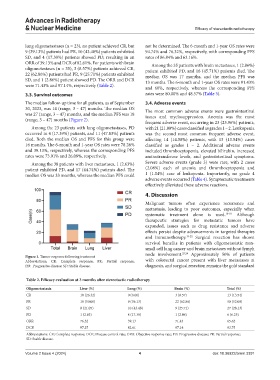
            Figure 1. Tumor response following treatment
            Abbreviations: CR:  Complete  response;  PR: Partial response;   with  colorectal  cancer  present  with  liver  metastases  at
            PD:  Progressive disease; SD: Stable disease.      diagnosis, and surgical resection remains the gold standard


            Table 2. Efficacy evaluation at 3 months after stereotactic radiotherapy
            Oligometastasis        Liver (%)           Lung (%)            Brain (%)              Total (%)
            CR                     10 (26.32)          0 (0.00)             3 (8.57)              13 (13.54)
            PR                     19 (50.00)          9 (39.13)            22 (62.86)            50 (52.08)
            SD                     8 (21.05)           10 (43.48)           9 (25.71)             27 (28.13)
            PD                     1 (2.63)            4 (17.39)            1 (2.86)              6 (6.25)
            ORR                    76.32               39.13                71.43                 65.62
            DCR                    97.37               82.61                97.14                 93.75
            Abbreviations: CR: Complete response; DCR: Disease control rate; ORR: Objective response rate; PD: Progressive disease; PR: Partial response;
            SD: Stable disease.


            Volume 2 Issue 4 (2024)                         4                              doi: 10.36922/arnm.3391

