


Page 57 - ARNM-2-4
P. 57
Advances in Radiotherapy
            & Nuclear Medicine                                                      Efficacy of stereotactic radiotherapy


            Table 3. Survival analysis
            Oligometastasis       6‑month PFS (%)        1‑year PFS (%)      6‑month OS (%)        1‑year OS (%)
            Liver                    33 (86.84)           24 (63.16)            36 (94.74)           29 (76.32)
            Lung                     17 (73.91)           6 (26.09)             18 (78.26)           9 (39.13)
            Brain                    28 (80.00)           17 (48.57)            32 (91.43)           21 (60)
            Total                    78 (81.25)           47 (48.96)            86 (89.58)           59 (61.46)
            Abbreviations: OS: Overall survival; PFS: Progression-free survival.

             A                                                 studies. We analyzed clinical data from patients treated
                                                               with SRT at our hospital, focusing on the distribution of
                                                               tumor types – primarily liver and brain metastases. We also
                                                               evaluated the efficacy of SRT in the treatment of metastatic
                                                               lesions. In addition, we explored the median survival time
                                                               and survival rate for each specific metastatic tumor after
                                                               SRT administration. Finally, through statistical analysis,
                                                               we concluded that adverse reactions graded as 3 or higher
                                                               were infrequent during the course of SRT and primarily
                                                               included anemia and leukopenia.
                                                                 Our  findings  indicated  that liver  and  brain
                                                               oligometastases were the most commonly treated tumors
                                                               with SRT, followed by lung oligometastases. Previous
                                                               studies have indicated that SRT is a hyperfractionated
                                                               radiotherapy predominantly used to treat large solid
                                                               tumors, including those in the liver, brain, and lungs. SRT is
                                                               particularly effective for managing oligometastases, which
             B
                                                               involve limited metastatic lesions. 12-15  At our hospital, liver,
                                                               and brain oligometastases are the primary targets for SRT.
                                                               Studies have also demonstrated that SRT can be applied
                                                               to metastatic sites such as the head and neck, bones, and
                                                               adrenal  glands  using  a  hyperfractionated  regimen. 15,28,29
                                                               However, further exploratory research is necessary to
                                                               evaluate the efficacy of SRT for these specialized sites.
                                                                 We conducted a 3-month evaluation to assess the short-
                                                               term efficacy of SRT in patients treated for liver and brain
                                                               oligometastases. SRT showed promising results, aligning
                                                               with findings from previous studies. Goodman  et al.
                                                               reported that the ORR for liver oligometastases following
                                                               SRT was approximately 69%, with a progression rate of only
                                                                  19
                                                               3%.  Our study revealed a similar ORR of 76.32%, with a
                                                               progression rate of 2.63%, reinforcing SRT’s effectiveness
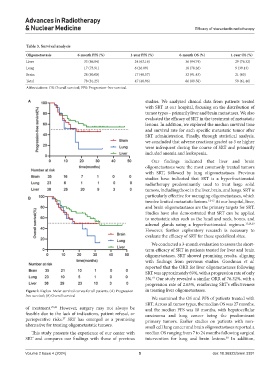
            Figure 2. Kaplan–Meier survival curves for all patients. (A) Progression-  in treating liver oligometastases.
            free survival; (B) Overall survival
                                                                 We examined the OS and PFS of patients treated with
                                                               SRT. Across all tumor types, the median OS was 27 months,
            of treatment. 25,26  However, surgery may not always be   and the median PFS was 18 months, with hepatocellular
            feasible due to the lack of indications, patient refusal, or   carcinoma and lung cancer being the predominant
            perioperative risks.  SRT has emerged as a promising   primary tumors. Earlier studies on patients with non-
                            27
            alternative for treating oligometastatic tumors.   small cell lung cancer and brain oligometastases reported a
               This study presents the experience of our center with   median OS ranging from 7 to 24 months following surgical
            SRT and compares our findings with those of previous   intervention for lung and brain lesions.  In addition,
                                                                                                 30

            Volume 2 Issue 4 (2024)                         5                              doi: 10.36922/arnm.3391

