


Page 97 - ARNM-2-4
P. 97
Advances in Radiotherapy
            & Nuclear Medicine                                        Malignant peripheral nerve sheath tumor: A case report


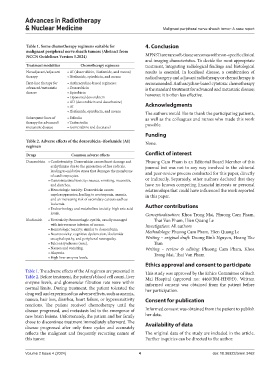
            Table 1. Some chemotherapy regimens suitable for   4. Conclusion
            malignant peripheral nerve sheath tumors (Abstract from
            NCCN Guidelines Version 3.2024)                    MPNSTs are rare soft-tissue sarcomas with non-specific clinical
                                                               and imaging characteristics. To decide the most appropriate
            Treatment modalities   Chemotherapy regimens       treatment, integrating radiological findings and histological
            Neoadjuvant/adjuvant   • AI (doxorubicin, ifosfamide, and mesna)  results is essential. In localized disease, a combination of
            therapy           • Ifosfamide, epirubicin, and mesna  radical surgery and adjuvant radiotherapy or chemotherapy is
            First-line therapy for   • Anthracycline‑based regimens:  recommended. Anthracycline-based cytotoxic chemotherapy
            advanced/metastatic   • Doxorubicin                is the standard treatment for advanced and metastatic disease;
            disease           • Epirubicin                     however, it is often less effective.
                              • Liposomal doxorubicin
                              • AD (doxorubicin and dacarbazine)
                              • AI                             Acknowledgments
                              • Ifosfamide, epirubicin, and mesna  The authors would like to thank the participating patients,
            Subsequent lines of   • Eribulin                   as well as the colleagues and nurses who made this work
            therapy for advanced/  • Trabectedin               possible.
            metastatic disease  • Gemcitabine and docetaxel
                                                               Funding
            Table 2. Adverse effects of the doxorubicin–ifosfamide (AI)   None.
            regimen
            Drugs              Common adverse effects          Conflict of interest
            Doxorubicin •  Cardiotoxicity: Doxorubicin causes heart damage and   Phuong Cam Pham is an Editorial Board Member of this
                       arrhythmias due to the generation of free radicals,   journal but was not in any way involved in the editorial
                       leading to oxidative stress that damages the membrane   and peer-review process conducted for this paper, directly
                       of cardiomyocytes.
                      •  Gastrointestinal toxicity: nausea, vomiting, mucositis,   or indirectly. Separately, other authors declared that they
                       and diarrhea.                           have no known competing financial interests or personal
                      •  Hematologic toxicity: Doxorubicin causes   relationships that could have influenced the work reported
                       myelosuppression, leading to neutropenia, anemia,   in this paper.
                       and an increasing risk of secondary cancers such as
                       leukemia.                               Author contributions
                      •  Endocrinology and metabolism toxicity: high uric acid
                       levels.                                 Conceptualization: Khoa Trong Mai, Phuong Cam Pham,
            Ifosfamide  •  Urotoxicity: hemorrhagic cystitis, usually managed   Thai Van Pham, Hien Quang Le
                       with intravenous infusion of mesna.     Investigation: All authors
                      • Hematologic toxicity: similar to doxorubicin.  Methodology: Phuong Cam Pham, Hien Quang Le
                      •  Neurotoxicity: cognitive dysfunction, ifosfamide
                       encephalopathy, and peripheral neuropathy.  Writing – original draft: Duong Binh Nguyen, Hoang The
                      • Falconi syndrome (rare).                  Tran
                      • Nausea and vomiting.                   Writing – review & editing: Phuong  Cam Pham, Khoa
                      • Alopecia.                                 Trong Mai, Thai Van Pham
                      • High liver enzyme levels.
                                                               Ethics approval and consent to participate
            Table 1. The adverse effects of the AI regimen are presented in   This study was approved by the Ethics Committee of Bach
            Table 2. Before treatment, the patient’s blood cell count, liver   Mai Hospital (approval no: 4460/BM-HĐĐĐ). Written
            enzyme levels, and glomerular filtration rate were within   informed consent was obtained from the patient before
            normal limits. During treatment, the patient tolerated the   her participation.
            drug well and experienced no adverse effects, such as anemia,
            nausea, hair loss, diarrhea, heart failure, or hypersensitivity   Consent for publication
            reactions. The patient received chemotherapy until the
            disease progressed, and metastasis led to the emergence of   Informed consent was obtained from the patient to publish
            new brain lesions. Unfortunately, the patient and her family   her data.
            chose to discontinue treatment immediately afterward. The   Availability of data
            disease  progressed  after  only  three  cycles  and  accurately
            reflects the malignant and frequently recurring nature of   The original data of the study are included in the article.
            this tumor.                                        Further inquiries can be directed to the author.


            Volume 2 Issue 4 (2024)                         4                              doi: 10.36922/arnm.3462

