


Page 96 - ARNM-2-4
P. 96
Advances in Radiotherapy
            & Nuclear Medicine                                        Malignant peripheral nerve sheath tumor: A case report


             A                     B                           exhibit any other adverse effects, such as infection,
                                                               thrombocytopenia, nausea, vomiting, or hair loss.
                                                                 However, after three chemotherapy cycles, the patient
                                                               experienced bilateral lower limb weakness, left-side
                                                               dominance, left cranial nerve  VI paralysis, and blurred
                                                               vision in the left eye. The patient underwent contrast-
                                                               enhanced cranial MRI, which revealed an 18 × 31-mm
                                                               lesion ventral to the pons, with mixed signals and strong
             C                     D                           and heterogeneous enhancements after contrast injection,
                                                               and thickening of the adjacent meninges (Figure 6).
                                                                 The physician explained that the disease was progressing
                                                               despite chemotherapy; however, the patient and her family
                                                               refused to continue treatment and chose palliative care and
                                                               symptomatic management in medical facilities.

                                                               3. Discussion
                                                                                                             1
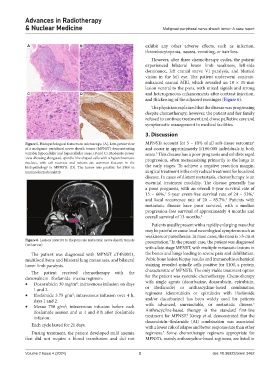
            Figure 5. Histopathological features on microscope. (A). Low-power view   MPNSTs account for 5 – 10% of all soft-tissue sarcomas
            of a malignant peripheral nerve sheath tumor (MPNST) demonstrating   and occur in approximately 1/100.000 individuals in both
            variable hypocellular and hypercellular areas. (B and C). Moderate-power   sexes.  This disease has a poor prognosis and exhibits rapid
                                                                   3
            view showing elongated, spindle-like shaped cells with a hyperchromatic   progression, often metastasizing primarily to the lungs in
            nucleus, with cell necrosis and mitosis are common features in the
            histopathology in MPNSTs. (D). The tumor was positive for S100 in   the early stages. To achieve a negative resection margin,
            immunohistochemistry.                              surgical treatment is the only radical treatment for localized
                                                               disease. In cases of distant metastasis, chemotherapy is an
                                                               essential treatment modality. The disease generally has
                                                               a poor prognosis, with an overall 5-year survival rate of
                                                               15 – 66%,   5-year event-free survival rate of 24 – 53%,
                                                                       1
                                                                                                             1
                                                               and local recurrence rate of 20 – 85.7%.  Patients with
                                                                                                 1
                                                               metastatic disease have poor survival, with a median
                                                               progression-free survival of approximately 4 months and
                                                               overall survival of 13 months. 2
                                                                 Patients usually present with a rapidly enlarging mass that
                                                               may be painful or cause local neurological symptoms such as
                                                               weakness or paresthesias. In most cases, the mass is >5 cm at
            Figure 6. Lesions anterior to the pons are metastatic nerve sheath tumors   presentation.  In the present case, the patient was diagnosed
                                                                         4
            (red arrow)
                                                               with a late-stage MPNST, with multiple metastatic lesions in
              The patient was diagnosed with MPNST cT4N0M1,    the bones and lungs leading to severe pain and debilitation.
            multifocal bone and bilateral lung metastases, and bilateral   Pubic bone lesion biopsy results and immunohistochemical
            lower limb paralysis.                              staining revealed spindle cells positive for S100, a protein
              The patient received chemotherapy with the       characteristic of MPNSTs. The only viable treatment option
            doxorubicin–ifosfamide–mesna regimen:              for the patient was systemic chemotherapy. Chemotherapy
            •   Doxorubicin 30 mg/m ; intravenous infusion on days   with  single  agents  (dacarbazine,  doxorubicin,  epirubicin,
                                 2
               1 and 2.                                        or  ifosfamide) or  anthracycline-based combination
            •   Ifosfamide 3.75 g/m ; intravenous infusion over 4 h,   regimens (doxorubicin or epirubicin with ifosfamide
                                2
               days 1 and 2.                                   and/or dacarbazine) has been widely used for patients
                                                                                                             5
            •   Mesna 750  g/m ; intravenous infusion before each   with advanced, unresectable, or metastatic disease.
                             2
               ifosfamide session and at 4 and 8 h after ifosfamide   Anthracycline-based therapy is the standard  first-line
                                                                                6
               infusion.                                       treatment for MPNST.  Kroep et al. demonstrated that the
              Each cycle lasted for 21 days.                   doxorubicin–ifosfamide (AI) combination was associated
                                                               with a lower risk of relapse and better response rate than other
              During treatment, the patient developed mild anemia   regimens.  Some chemotherapy regimens appropriate for
                                                                      7
            that did not require a blood transfusion and did not   MPNSTs, mainly anthracycline-based regimens, are listed in
            Volume 2 Issue 4 (2024)                         3                              doi: 10.36922/arnm.3462

