


Page 35 - BH-1-1
P. 35
Brain & Heart                                             Atropine can reducing reperfusion vagal reflex in STEMI


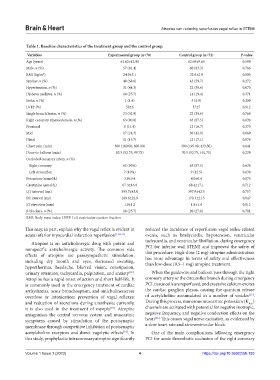
            Table 1. Baseline characteristics of the treatment group and the control group.
             Variables                         Experimental group (n=70)     Control group (n=72)      P‑value
            Age (years)                             61.62±12.90                  62.68±9.66             0.589
            Male, n (%)                              57 (81.4)                    60 (83.3)             0.766
            BMI (kg/m )                              24.0±3.1                     23.6±2.9              0.805
                   2
            Smoker, n (%)                            48 (68.6)                    43 (59.7)             0.272
            Hypertension, n (%)                      31 (44.3)                    22 (30.6)             0.075
            Diabetes mellitus, n (%)                 18 (25.7)                    14 (19.4)             0.371
            Stoke, n (%)                              1 (1.4)                     5 (6.9)               0.209
            LVEF (%)                                   58±6                        57±7                 0.912
            Single branch lesion, n (%)              23 (32.9)                    22 (30.6)             0.768
            Right coronary atherosclerosis, n (%)    63 (90.0)                    63 (87.5)             0.638
            Proximal                                  8 (11.4)                    12 (16.7)             0.370
            Mid                                      17 (24.3)                    30 (42.9)             0.069
            Distal                                   11 (15.7)                    12 (17.1)             0.878
            Chest pain (min)                      300 (180.00, 600.00)        300 (195.00, 433.50)      0.641
            Door-to-balloon (min)                 83.5 (52.75, 99.75)         70.5 (52.75, 101.75)      0.239
            Occluded coronary artery, n (%)
             Right coronary                          63 (90%)                     63 (87.5)             0.638
             Left circumflex                          7 (10%)                     9 (12.5)              0.638
            Potassium (mmol/L)                        3.9±0.4                     4.0±0.4               0.875
            Creatinine (μmol/L)                      67.3±16.0                   68.4±17.1              0.712
            QT interval (ms)                         395.7±43.0                  397.9±42.5             0.757
            PR interval (ms)                         169.6±22.9                  170.3±21.5             0.847
            ST elevation (mm)                         1.9±1.2                     1.8±1.4               0.812
            β-blockers, n (%)                        18 (25.7)                    20 (27.8)             0.781
            BMI: Body mass index; LVEF: Left ventricular ejection fraction

            This may, in part, explain why the vagal reflex is evident in   reduced the incidence of reperfusion vagal reflex-related
            acute inferior myocardial infarction reperfusion [1,10,11] .  events, such as bradycardia, hypotension, ventricular
                                                               tachycardia, and ventricular fibrillation, during emergency
              Atropine  is  an  anticholinergic  drug  with  potent  and
            nonspecific anticholinergic activity. The common side   PCI for inferior wall STEMI and improved the safety of
            effects of atropine are parasympathetic stimulation,   this procedure. High-dose (2 mg) atropine administration
                                                               has more advantage in terms of safety and effectiveness
            including dry mouth and eyes, decreased sweating,   than low-dose (0.5–1 mg) atropine treatment.
            hyperthermia,  headache, blurred vision, constipation,
            urinary retention, tachycardia, palpitation, and anxiety .   When the guidewire and balloon pass through the right
                                                        [12]
            Atropine has a rapid onset of action and short half-life. It   coronary artery or the circumflex branch during emergency
            is commonly used in the emergency treatment of cardiac   PCI, tissue cells are reperfused, and excessive calcium excites
            arrhythmias, acute bronchospasm, and anticholinesterase   the cardiac ganglion plexus, causing the quantum release
                                                                                                           [15]
            overdose or intoxication; prevention of vagal reflexes;   of  acetylcholine  accumulated  in  a  number  of  vesicles .
            and reduction of secretions during anesthesia; currently,   During this process, numerous muscarinic potassium (K )
                                                                                                           Ach
            it is also used in the treatment of myopia . Atropine   channels are activated with potential for negative inotropic,
                                                [13]
            antagonizes the central nervous system and muscarinic   negative frequency, and negative conduction effects on the
                                                                   [16]
            symptoms caused by stimulation of the postsynaptic   heart . This causes vagal nerve excitation, as evidenced by
            membrane through competitive inhibition of postsynaptic   a slow heart rate and atrioventricular block.
            acetylcholine receptors and direct vagolytic effects . In   One  of the main  complications following emergency
                                                     [14]
            this study, prophylactic intracoronary atropine significantly   PCI for acute thrombotic occlusion of the right coronary

            Volume 1 Issue 1 (2023)                         4                          https://doi.org/10.36922/bh.193

