


Page 85 - BH-2-2
P. 85
Brain & Heart                                                   Case of rhombencephalitis and hydrocephalus


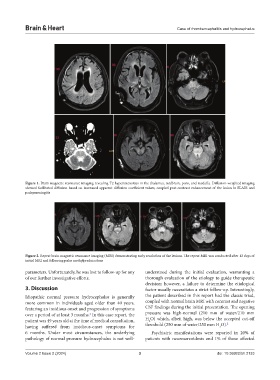
            Figure 1. Brain magnetic resonance imaging revealing T2 hyperintensities in the thalamus, midbrain, pons, and medulla. Diffusion-weighted imaging
            showed facilitated diffusion based on increased apparent diffusion coefficient values, coupled post-contrast enhancement of the lesion in FLAIR and
            pachymeningitis


            Figure 2. Repeat brain magnetic resonance imaging (MRI) demonstrating early resolution of the lesions. The repeat MRI was conducted after 12 days of
            initial MRI and following pulse methylprednisolone


            parameters. Unfortunately, he was lost to follow-up for any   understood during the initial evaluation, warranting a
            of our further investigative efforts.              thorough evaluation of the etiology to guide therapeutic
                                                               decision; however, a failure to determine the etiological
            3. Discussion                                      factor usually necessitates a strict follow-up. Interestingly,
            Idiopathic normal pressure hydrocephalus is generally   the patient described in this report had the classic triad,
            more common in individuals aged older than 40  years,   coupled with normal brain MRI with contrast and negative
            featuring an insidious onset and progression of symptoms   CSF findings during the initial presentation. The opening
            over a period of at least 3 months.  In this case report, the   pressure was high-normal (210  mm of water/210  mm
                                       1
            patient was 49 years old at the time of medical consultation,   H O) which, albeit high, was below the accepted cut-off
                                                                2
            having  suffered  from  insidious-onset  symptoms  for   threshold (250 mm of water/250 mm H O). 2
                                                                                              2
            6  months. Under most circumstances, the underlying   Psychiatric manifestations were reported in 20% of
            pathology of normal pressure hydrocephalus is not well-  patients with neurosarcoidosis and 1% of those affected

            Volume 2 Issue 2 (2024)                         3                                doi: 10.36922/bh.2133

