


Page 95 - BH-2-2
P. 95
Brain & Heart                                  Lipomatous hypertrophy of the septum secundum associated with PFO


            A                       B                          A                       B


            C                       D
                                                               C                       D


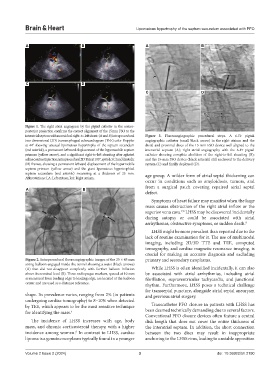
            Figure  1.  The right atrial angiogram by the pigtail catheter in the antero-
            posterior projection confirms the correct alignment of the 15mm FSO to the
            interatrial septum with no residual right-to-left shunt. (A and B) Intraprocedural   Figure  3. Fluoroangiographic procedural steps. A 6-Fr pigtail
            two-dimensional (2D) transesophageal echocardiogram (TEE) color Doppler   angiographic catheter (small black arrow) in the right atrium and the
            at 44° showing unusual lipomatous hypertrophy of the septum secundum   distal and proximal discs of the 15-mm FSO device well aligned to the
            (red asterisk), a permanent leftward displacement of the hypermobile septum   interatrial septum (A); right atrial angiography with the 6-Fr pigtail
            primum (yellow arrow), and a significant right-to-left shunting after agitated   catheter showing complete abolition of the right-to-left shunting (B);
            saline contrast injection; intraprocedural 2D TEE at 105°, systolic (C) and diastolic   and the 15-mm FSO device (black asterisk) still anchored to the delivery
            (D) frames, showing a permanent leftward displacement of the hypermobile   system (C) and finally deployed (D).
            septum primum (yellow arrow) and the giant lipomatous hypertrophied
            septum secundum (red asterisk) measuring at a thickness of 25  mm.   age group. A milder form of atrial septal thickening can
            Abbreviations: LA: Left atrium; RA: Right atrium.
                                                               occur in conditions such as amyloidosis, tumors, and
                                                               from  a  surgical  patch  covering  repaired  atrial  septal
            A                       B
                                                               defect.
                                                                 Symptoms of heart failure may manifest when the large
                                                               mass causes obstruction of the right atrial inflow or the
                                                               superior vena cava.  LHSS may be discovered incidentally
                                                                              7,8
                                                               during autopsy or could be associated with atrial
                                                               arrhythmias, obstructive symptoms, or sudden death. 9
                                                                 LHSS might be more prevalent than reported due to the
                                                               lack of routine examination for it. The use of multimodal
                                                               imaging, including 2D/3D TTE and TEE, computed
                                                               tomography, and cardiac magnetic resonance imaging, is
                                                               crucial for making an accurate diagnosis and excluding
            Figure 2. Intraprocedural fluoroangiographic images of the 25 × 45 mm   primary and secondary neoplasms.
            sizing balloon engaged inside the tunnel showing a waist (black arrows)
            (A) that did not disappear completely with further balloon inflation   While LHSS is often identified incidentally, it can also
            above its nominal level (B). Three radiopaque markers, spaced at 10 mm   be  associated  with atrial arrhythmias, including atrial
            as measured from leading edge to leading edge, are located at the balloon   fibrillation, supraventricular tachycardia, and junctional
            center and are used as a distance reference.       rhythm. Furthermore, LHSS poses a technical challenge
                                                               for transseptal puncture, alongside atrial septal aneurysm
            shape. Its prevalence varies, ranging from 2% (in patients   and previous atrial surgery.
            undergoing cardiac tomography) to 8–10% when detected
            by TEE, which appears to be the most sensitive technique   Transcatheter PFO closure in patients with LHSS has
            for identifying the mass. 5                        been deemed technically demanding due to several factors.
                                                               Conventional PFO closure devices often feature a central
              The incidence of LHSS increases with age, body   disk length that does not cover the entire thickness of
            mass, and chronic corticosteroid therapy, with a higher   the interatrial septum. In addition, the short connection
            incidence among women.  In contrast to LHSS, cardiac   between the two discs may result in inappropriate
                                 6
            lipoma is a genuine neoplasm typically found in a younger   anchoring to the LHSS rims, leading to unstable apposition

            Volume 2 Issue 2 (2024)                         3                                doi: 10.36922/bh.2190

