


Page 96 - BH-2-2
P. 96
Brain & Heart                                  Lipomatous hypertrophy of the septum secundum associated with PFO


            A                       B                          Author contributions
                                                               Conceptualization: Alexandr G. Osiev, Eustaquio Maria
                                                                  Onorato
                                                               Investigation: Sergey Terekhin, Dmitry Shchekochikhin
                                                               Methodology: Alexandr G. Osiev
                                                               Supervision: Eustaquio Maria Onorato
            C                       D                          Writing – original draft: Alexandr G. Osiev
                                                               Writing – review & editing: Eustaquio Maria Onorato
                                                               Ethics approval and consent to participate

                                                               Permission was obtained from each of the subjects to
                                                               participate in the study.

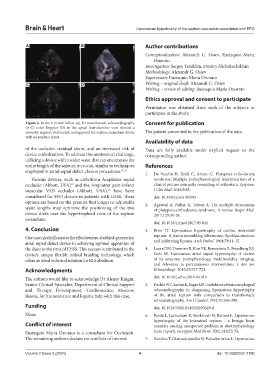
            Figure 4. At the 6-month follow-up, 2D transthoracic echocardiography   Consent for publication
            (A-C)  color  Doppler  (D)  in  the  apical  four-chamber  view  showed  a
            correctly aligned, well-seated, and apposed the septum secundum device   The patient consented to the publication of the data.
            with no residual shunt.
                                                               Availability of data
            of the occluder, residual shunt, and an increased risk of   Data are fully available under explicit request to the
            device embolization. To address this anatomical challenge,   corresponding author.
            utilizing a device with a wider waist that can encompass the
            entire length of the septum is crucial, similar to techniques   References
            employed in atrial septal defect closure procedures. 10,11
                                                               1.   De Vecchis R, Baldi C, Ariano C. Platypnea-orthodeoxia
              Various devices, such as cribriform Amplatzer septal   syndrome: Multiple pathophysiological interpretations of a
            occluder (Abbott, USA)  and the Amplatzer post-infarct   clinical picture primarily consisting of orthostatic dyspnea.
                               12
            muscular VSD  occluder (Abbott, USA),  have been      J Clin Med. 2016;5:85.
                                               13
            considered for PFO closure in patients with LHSS. These      doi: 10.3390/jcm5100085
            options are based on the premise that longer or adjustable   2.   Agrawal A, Palkar A, Talwar A. The multiple dimensions
            waist lengths may optimize the positioning of the two   of platypnea-orthodeoxia syndrome: A review. Respir Med.
            device disks over the hypertrophied rims of the septum   2017;129:31-38.
            secundum.
                                                                  doi: 10.1016/j.rmed.2017.05.016
            4. Conclusion                                      3.   Prior JT. Lipomatous hypertrophy of cardiac interatrial
            Our case nicely illustrates the effectiveness of a third-generation   septum. A lesion resembling hibernoma, lipoblastomatosis
            atrial septal defect device in achieving optimal apposition of   and infiltrating lipoma. Arch Pathol. 1964;78:11-15.
            the discs to the rims of LHSS. This success is attributed to the   4.   Laura DM, Donnino R, Kim EE, Benenstein R, Freedberg RS,
            device’s  unique flexible  nitinol  braiding technology, which   Saric M. Lipomatous atrial septal hypertrophy: A  review
            offers an ideal technical solution for RLS abolition.  of  its  anatomy,  pathophysiology,  multimodality  imaging,
                                                                  and relevance to percutaneous interventions.  J  Am Soc
            Acknowledgments                                       Echocardiogr. 2016;29:717-723.
            The authors would like to acknowledge Dr Alexey Knigin,      doi: 10.1016/j.echo.2016.04.014
            Senior Clinical Specialist, Department of Clinical Support   5.   Pochis WT, Saeian K, Sagar KB. Usefulness of transesophageal
            and Therapy Development, Cardiomedics, Moscow,        echocardiography in diagnosing lipomatous hypertrophy
            Russia, for his assistance and logistic help with this case.  of the atrial septum with comparison to transthoracic
                                                                  echocardiography. Am J Cardiol. 1992;70:396-398.
            Funding                                               doi: 10.1016/0002-9149(92)90629-d

            None.                                              6.   Patsia L, Lartsuliani K, Intskirveli N, Ratiani L. Lipomatous
                                                                  hypertrophy of  the interatrial  septum  -  a benign heart
            Conflict of interest                                  anomaly causing unexpected problem in electrophysiology

            Eustaquio Maria Onorato is a consultant for Occlutech.   (case report). Georgian Med News. 2021;318:72-74.
            The remaining authors declare no conflicts of interest.  7.   Xanthos T, Giannakopoulos N, Papadimitriou L. Lipomatous


            Volume 2 Issue 2 (2024)                         4                                doi: 10.36922/bh.2190

