


Page 52 - DP-1-1
P. 52
Design+                                                         Multimodality in art teacher education in China


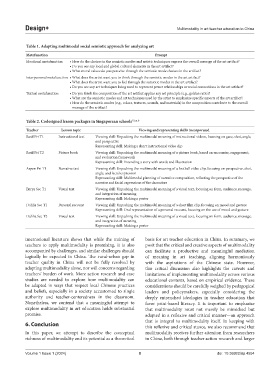
            Table 1. Adapting multimodal social semiotic approach for analyzing art
            Metafunction                                           Prompt
            Ideational metafunction   • How do the choices in the semiotic modes and artistic techniques express the overall message of the art artifact?
                               • Do you see any local and global cultural elements in the art artifact?
                               • What moral values do you perceive through the semiotic mode choices in the artifact?
            Interpersonal metafunction  • What does the artist want you to think through the semiotic modes in the art artifact?
                               • What does the artist want you to feel through the semiotic modes in the art artifact?
                               • Do you see any art techniques being used to represent power relationships or social connections in the art artifact?
            Textual metafunction   • Do you think the composition of the art artifact applies any art principle (e.g., golden ratio)?
                               • What are the semiotic modes and art techniques used by the artist to emphasize specific aspects of the art artifact?
                               •  How do the semiotic modes (e.g., colors, textures, sounds, and materials) in the composition contribute to the overall
                                message of the artifact?


            Table 2. Codesigned lesson packages in Singaporean schools 15, p. 6
            Teacher        Lesson topic                     Viewing and representing skills incorporated
            Basil Pri T1  Instructional text  Viewing skill: Unpacking the multimodal meaning of instructional videos, focusing on gaze, shot, angle,
                                          and perspective
                                          Representing skill: Making a short instructional video clip
            Basil Pri T2  Picture book    Viewing skill: Unpacking the multimodal meaning of a picture book, based on encounter, engagement,
                                          and evaluation framework
                                          Representing skill: Extending a story with words and illustration
            Aspen Pri T1   Narrative text  Viewing skill: Unpacking the multimodal meaning of a football video clip, focusing on perspective, shot,
                                          angle, and facial expression
                                          Representing skill: Multimodal planning of narrative composition, reflecting the perspective of the
                                          narrator and facial expressions of the characters
            Eurya Sec T1   Visual text    Viewing skill: Unpacking the multimodal meaning of a visual text, focusing on form, audience, message,
                                          and integration of meaning
                                          Representing skill: Making a poster
            Dahlia Sec T1  Personal recount  Viewing skill: Unpacking the multimodal meaning of a short film clip, focusing on mood and gesture
                                          Representing skill: Oral representation of a personal recount, focusing on the use of mood and gesture
            Dahlia Sec T2   Visual text   Viewing skill: Unpacking the multimodal meaning of a visual text, focusing on form, audience, message,
                                          and integration of meaning
                                          Representing skill: Making a poster


            international literature shows that while the training of   basis for art teacher education in China. In summary, we
            teachers to apply multimodality is promising, it is also   posit that the critical and creative aspects of multimodality
            accompanied by challenges, and similar challenges should   can facilitate a productive and meaningful mediation
            logically be expected in China. The rural-urban gap in   of meaning in art teaching, aligning harmoniously
            teacher  quality  in  China  will  not  be  fully  resolved  by   with  the  aspirations  of  the  Chinese  state.  However,
            adapting multimodality alone, nor will concerns regarding   this critical discussion also highlights the caveats and
            teachers’ burden of work. More action research and case   limitations of implementing multimodality across various
            studies are needed to explore how multimodality can   educational contexts, based on empirical evidence. These
            be adapted in ways that respect local Chinese practices   considerations should be carefully weighed by pedagogical
            and beliefs, especially in a society accustomed to single   leaders and policymakers, especially considering the
            authority and teacher-centeredness in the classroom.   deeply entrenched ideologies in teacher education that
            Nonetheless, we contend that a meaningful attempt to   favor print-based literacy. It is important to emphasize
            explore multimodality in art education holds substantial   that multimodality must not merely be mimicked but
            promise.                                           adapted in a reflexive and critical manner—an approach
            6. Conclusion                                      that  is integral  to multimodality itself.  In keeping with
                                                               this reflexive and critical stance, we also recommend that
            In this paper, we attempt to describe the conceptual   multimodality receives further attention from researchers
            richness of multimodality and its potential as a theoretical   in China, both through teacher action research and larger


            Volume 1 Issue 1 (2024)                         8                                doi: 10.36922/dp.4554

