


Page 104 - DP-2-1
P. 104
Design+                                                                   AI’s role in medical history taking


                                                               of  efficiency,  stress  reduction,  and enhanced diagnostic
                                                               accuracy, which strongly motivates the adoption of AI.
                                                               Nevertheless, addressing concerns about the doctor–patient
                                                               relationship and ensuring the reliability of AI systems are
                                                               crucial for its successful implementation. Ultimately, the
                                                               intention to use AI in medical history taking is driven by its
                                                               potential to significantly improve patient care while managing
                                                               the inherent challenges associated with its adoption.
                                                                 The doctors surveyed had very different personal data,
                                                               be it the specialist discipline, the amount of professional
                                                               experience, or the employment relationship. Nevertheless,
                                                               the interview statements were characterized by a surprising
                                                               similarity.

                                                                 A similarity matrix was created to illustrate the
                                                               similarity of the interview data.  This was created taking
                                                                                        37
                                                               into account the variables of age, workplace/position, and
                                                               experience with AI based on the occurrence of the codes.
                                                               The “simple match” was selected as the calculation variant,
                                                               which evaluates both the presence and absence of codes as
                                                               a match. This variant was chosen because all codes were
                                                               assigned in the majority of the documents and the absence
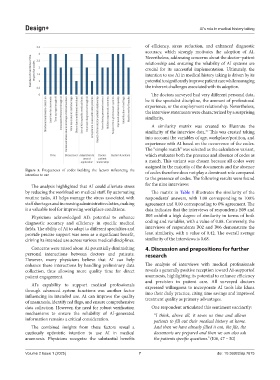
            Figure  3. Frequencies of codes building the factors influencing the   of codes therefore does not play a dominant role compared
            intention to use
                                                               to the presence of codes. The following results were found
              The analysis highlighted that AI could alleviate stress   for the nine interviews:
            by reducing the workload on medical staff. By automating   The matrix in Table 1 illustrates the similarity of the
            routine tasks, AI helps manage the stress associated with   respondents’ answers, with 1.00 corresponding to 100%
            staff shortages and increasing administrative duties, making   agreement and 0.00 corresponding to 0% agreement. The
            it a valuable tool for improving workplace conditions.  data indicates that the interviews of respondents B09 and
              Physicians acknowledged AI’s potential to enhance   B05 exhibit a high degree of similarity in terms of both
            diagnostic accuracy and efficiency in  specific  medical   coding and variables, with a value of 0.88. Conversely, the
            fields. The ability of AI to adapt to different specialties and   interviews of respondents B02 and B06 demonstrate the
            provide precise support was seen as a significant benefit,   least similarity, with a value of 0.42. The overall average
            driving its intended use across various medical disciplines.  similarity of the interviews is 0.68.
              Concerns were raised about AI potentially diminishing   4. Discussion and prepositions for further
            personal interactions between doctors and patients.   research
            However,  many  physicians  believe  that  AI  can  help
            enhance these interactions by handling preliminary data   The analysis of interviews with medical professionals
            collection, thus allowing more quality time for direct   reveals a generally positive reception toward AI-supported
            patient engagement.                                anamnesis, highlighting its potential to enhance efficiency
                                                               and precision in patient care. All surveyed doctors
              AI’s capability to support medical professionals   expressed willingness to incorporate AI tools like Idana
            through advanced system functions was another factor   into their daily practice, citing time savings and improved
            influencing its intended use. AI can improve the quality   treatment quality as primary advantages.
            of anamnesis, identify red flags, and ensure comprehensive
            data collection. However, the need for robust verification   One respondent articulated this sentiment succinctly:
            mechanisms to  ensure  the reliability  of  AI-generated      “I think, above all, it saves us time and allows
            information remains a critical consideration.         patients to fill out their medical history at home.
              The combined insights from these factors reveal a   And then we have already filled it out, the file, the
            cautiously optimistic intention to use AI in medical   documents are prepared and then we can also ask
            anamnesis. Physicians recognize the substantial benefits   the patients specific questions.” (I06, 47 – 50)


            Volume 2 Issue 1 (2025)                         7                                doi: 10.36922/dp.7675

