


Page 75 - DP-2-1
P. 75
Design+                                                                    Evaluating a building code app


            interior design department. Most participants were females   Figure 6 reveals that about 89% of participants agree
            with ages ranging from 18 to 29. More than half of the   or strongly agree that the Building Code Calculator
            participants are White, with the remaining identifying as   App helped them to remember and understand the
            other racial groups or multiracial. Over half of participants   building code’s content, while about 11% of participants
            receive grade A+ or A, with 37% receiving A- or B+, while   disagreed with these two statements. It also shows that
            only 10% receiving grades below B+.                all participants agree or strongly agree that the Building
              About 89% of the participants strongly agreed/   Code Calculator App helped them to apply the building
            agreed that understanding the building code should be   code’s content. It also shows that about 68% of participants
            important to interior designers and ensuring that interior   agree or strongly agree that the Building Code Calculator
            design solutions comply with the building code should   App helped them to analyze the building code’s content.
            be important to interior designers, while about 11%   Figure 6 also reveals that about 74% of participants agree
            strongly agreed with these two statements, as shown in   or strongly agree that the Building Code Calculator App
            Figure 3. Figure 4 shows the different levels of participants’   helped them to evaluate the building code’s content.
            familiarity and experience with building code.     Furthermore, it shows that about 89% of participants
                                                               agree or strongly agree that the Building Code Calculator
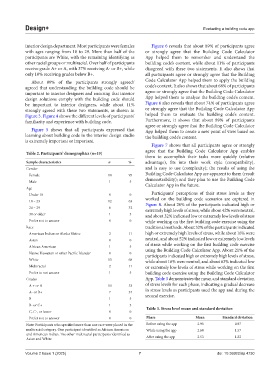
              Figure  5 shows that all participants expressed that   App helped them to create a new point of view based on
            learning about building code in the interior design studio   the building code’s content.
            is extremely important or important.
                                                                 Figure 7 shows that all participants agree or strongly
                                                               agree  that  the  Building  Code  Calculator  App  enables
            Table 2. Participants’ demographics (n=19)
                                                               them to accomplish their tasks more quickly (relative
            Sample characteristics             n        %      advantage), fits into their work style (compatibility),
            Gender                                             and is easy to use (complexity); the results of using the
             Female                            18       95     Building Code Calculator App are apparent to them (result
                                                               demonstrability); and they plan to use the Building Code
             Male                              1        5
            Age                                                Calculator App in the future.
             Under 18                          0        0        Participants’ perceptions of their stress levels as they
             18 – 23                           12       63     worked on the building code scenarios are captured in
                                                               Figure 8. About 26% of the participants indicated high or
             24 – 29                           6        32     extremely high levels of stress, while about 42% were neutral,
             30 or older                       1        5      and about 32% indicated low or extremely low levels of stress
             Prefer not to answer              0        0      while working on the first building code exercise using the
            Race                                               traditional methods. About 32% of the participants indicated
             American Indian or Alaska Native  2        11     high or extremely high levels of stress, while about 16% were
             Asian                             0        0      neutral, and about 52% indicated low or extremely low levels
             African American                  1        5      of stress while working on the first building code exercise
                                                               using the Building Code Calculator App. About 21% of the
             Native Hawaiian or other Pacific Islander  0  0   participants indicated high or extremely high levels of stress,
             White                             13       68     while about 16% were neutral, and about 63% indicated low
             Multiracial                       2        11     or extremely low levels of stress while working on the first
             Prefer to not answer              1        5      building code exercise using the Building Code Calculator
            Grades                                             App. Table 3 demonstrates the mean and standard deviation
             A + or A                          10       53     of stress levels for each phase, indicating a gradual decrease
             A- or B+                          7        37     in stress levels as participants used the app and during the
             B                                 1        5      second exercise.
             B- or C+                          1        5      Table 3. Stress level mean and standard deviation
             C, C-, or lower                   0        0
             Prefer not to answer              0        0      Phase                Mean        Standard deviation
            Note: Participants who specified more than one race were placed in the   Before using the app  2.95  0.97
            multiracial category. One participant identified as African American   While using the app  2.68  1.57
            and American Indian. The other multiracial participants identified as
            Asian and White.                                   After using the app   2.53            1.22


            Volume 2 Issue 1 (2025)                         7                                doi: 10.36922/dp.4730

