


Page 101 - DP-2-2
P. 101
Design+                                                                 Modern interpretations of probability


                                                                 At the same time, in the general case, when the exact
                                                               value of probability based on the property of symmetry
                                                               of events cannot be calculated, an inductive assumption is
                                                               made that the relative frequency of such mass, recurrent
                                                               events is very close to some number, which is called
                                                               probability. Consequently, inductive inference is necessary
                                                               to support the frequency interpretation of probabilities.
                                                               Still, given that any inductive inference is a departure
                                                               from the boundaries of the known, it inevitably leads to
                                                               difficulties of a theoretical nature.
                                                                 An essential (almost the most important) problem
                                                               arising in applying methods based on the frequency
                                                               interpretation of probability is the verification of the
                                                               correctness  of  the  obtained  results.  This  is  because
                                                               verifying the truth (adequacy) of the obtained probabilistic
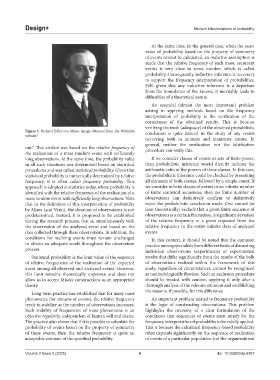
            Figure 3. Richard Edler von Mises. Image obtained from the Wikidata   conclusion is quite natural in the study of any events
            website. 7
                                                               occurring both in animate and inanimate nature. In
                                                               general, neither the verification nor the falsification
            out.  This artifact was based on the relative frequency of   procedure can verify this.
               8
            the  realization of a mass random event  with sufficiently
            long observations. At the same time, the probability value   If we consider classes of events as sets of finite power,
            in all such situations was determined based on statistical   then probabilistic inference would directly indicate the
            procedures and was called statistical probability. Given that   arithmetic ratio of the powers of these classes. In this case,
            statistical probability is numerically determined by relative   the probabilistic inference could be checked by presenting
            frequency,  it  is  often  called  frequency probability.  This   all elements of both classes, followed by a simple count. If
            approach is adopted in statistics today, where probability is   we consider infinite classes of events or an infinite number
            identified with the relative frequency of the realization of a   of finite statistical sequences, then no finite number of
            mass random event with sufficiently long observations. Note   observations can definitively confirm or definitively
            that in the definition of this interpretation of probability   reject the probabilistic conclusion made. One cannot (at
            by Mises (and Venn), the duration of observations is not   least theoretically) exclude that a given finite sequence of
            predetermined. Instead, it is proposed to be established   observations is a certain fluctuation, a significant deviation
            during the research process, that is, simultaneously with   of the relative frequency in a given sequence from the
            the observation of  the analyzed event and based  on  the   relative frequency in the entire infinite class of analyzed
            data collected through these observations. In addition, the   events.
            conditions for realizing events must remain unchanged   In this context, it should be noted that the common
            to obtain an adequate result throughout the observation   practice among specialists from different fields of discarding
            process.                                           individual observations (experiments) or experimental

              Statistical probability is the limit value of the sequence   results that differ significantly from the results of the bulk
            of relative frequencies of the realization of the expected   of observations realized within the framework of this
            event among all observed and analyzed events. However,   study, regardless of circumstances, cannot be recognized
            this  limit  remains  theoretically  unproven  and  does  not   as methodologically flawless. Such an exclusion procedure
            allow us to accept Mises’s constructions as an appropriate   should be treated with caution, applying it only after a
            theory.                                            thorough analysis of the relevant situation and establishing
                                                               the reasons, if possible, for this difference.
              Long-term practice has established that for many mass
            phenomena (for streams of events), the relative frequency   An important problem related to frequency probability
            tends to stabilize as the number of observations increases.   is  the  logic  of  constructing  observations.  This  problem
            Such stability of frequencies of mass phenomena is an   highlights the necessity of a clear formulation of the
            objective regularity, independent of human will and desire.   conditions  that  sequences  of  events  must  satisfy  for  the
            The practice also shows that if it is possible to calculate the   frequency interpretation of probability to be validly applied.
            probability of events based on the property of symmetry   This is because the calculated frequency-based probability
            of these events, then the relative frequency is quite an   often depends significantly on the sequence of realization
            acceptable estimate of the specified probability.  of events of a particular population (on the organizational


            Volume 2 Issue 2 (2025)                         6                                doi: 10.36922/dp.6387

