


Page 106 - DP-2-2
P. 106
Design+                                                                 Modern interpretations of probability


                            Classical (symmetric)    Frequency (statistical)  Axiomatic interpretation
                          interpretation of probability  interpretation of probability  of probability


                                                      Development of the
                                                     category “probability”


                                                      Development of the
                                                       category “logic”


                            Multi-valued  Infinite-valued  Probabilistic  Probability  Fuzzy logic
                               logic         logic          logic          logic
                            Figure 5. The structure of the probability category and its development concerning the logic category


                                                               classical  and  frequentist  interpretations  of  probability,
                                                               J. Keynes proposed to consider probability as the degree
                                                               of a reasonable belief attributed to relevant statements
                                                               (events) given exactly fixed data. “The terms  credibility
                                                               and probability,” wrote J.M. Keynes, “describe the different
                                                               degrees of reasonable belief in some statement which we can
                                                               attribute to that statement under different knowledge.” 17(p.1)
                                                               In Keynes’s interpretation, probability (as some numerical
                                                               value) is established for a logical relation between two
                                                               sets  of  statements.  It  reflects  the  degree  of  belief  in  the
                                                               correctness (or incorrectness) of a statement, and the
                                                               numerical value of this degree of belief is not constant but
                                                               varies  depending  on  the available knowledge  (available
                                                               information) regarding the analyzed phenomena, objects,
                                                               and processes. All of the  above points to  the analytical
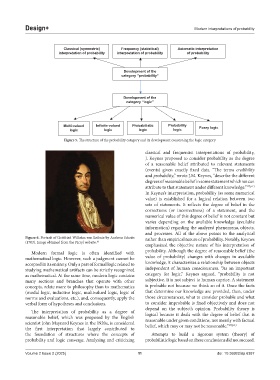
            Figure 6. Portrait of Gottfried Wilhelm von Leibniz by Andreas Scheits   rather than empirical nature of probability. Notably, Keynes
            (1703). Image obtained from the Picryl website. 16
                                                               emphasized the objective nature of his interpretation of
              Modern formal logic is often identified with     probability. Although the degree of reasonable belief (the
            mathematical logic. However, such a judgment cannot be   value of probability) changes with changes  in available
            accepted in its entirety. Only a part of formal logic related to   knowledge, it characterizes a relationship between objects
            studying mathematical artifacts can be strictly recognized   independent of human consciousness. “As an important
            as mathematical. At the same time, modern logic contains   category for logic,” Keynes argued, “probability is not
            many sections and branches that operate with other   subjective. It is not subject to human caprice. A statement
            concepts, relate more to philosophy than to mathematics   is probable not because we think so of it. Once the facts
            (modal logic, inductive logic, multivalued logic, logic of   that determine our knowledge are provided, then, under
            norms and evaluations, etc.), and, consequently, apply the   those circumstances, what to consider probable and what
            verbal form of hypotheses and conclusions.         to consider improbable is fixed objectively and does not
                                                               depend on the subject’s opinion. Probability theory is
              The interpretation of probability as a degree of
            reasonable belief, which was proposed by the English   logical  because  it  deals  with  the  degree  of  belief  that  is
                                                               reasonable under given conditions, not merely with factual
            scientist John Maynard Keynes in the 1920s, is considered   belief, which may or may not be reasonable.” 17(p.1)
            the first interpretation that largely contributed to
            the  foundation  of  structures  where  the  concepts  of   Attempts to build a rigorous system (theory) of
            probability and logic converge. Analyzing and criticizing   probabilistic logic based on these conclusions did not succeed.

            Volume 2 Issue 2 (2025)                         11                               doi: 10.36922/dp.6387

