


Page 67 - DP-2-2
P. 67
Design+                                                               Da Vinci AI Tutor in art history learning


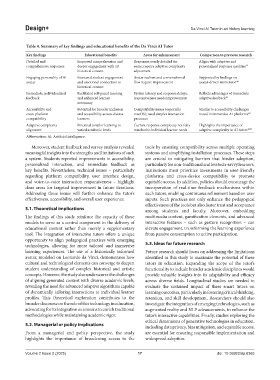
            Table 4. Summary of key findings and educational benefits of the Da Vinci AI Tutor
            Key findings             Educational benefits     Areas for enhancement   Comparison to previous research
            Detailed and          Improved comprehension and   Responses overly detailed for   Aligns with adaptive and
            comprehensive responses  deeper engagement with art   some; require adaptive complexity   personalized response qualities 42
                                  historical content      adjustment
            Engaging personality of AI   Increased student engagement   Avatar realism and conversational   Supported by findings on
            avatar                and emotional connection to   flow require improvement  avatar-driven immersion 44
                                  historical content
            Immediate, individualized   Facilitated self-paced learning   System latency and response delays;   Reflects advantages of immediate
            feedback              and enhanced learner    responsiveness needs improvement  adaptive feedback 43
                                  autonomy
            Accessibility and     Potential for broader inclusion   Compatibility issues (especially   Similar to accessibility challenges
            cross-platform        and accessibility across diverse   macOS); need simpler interaction   noted in immersive AI platforms 44
            compatibility         learners                processes
            Adaptive complexity   Potential to tailor learning to   Current response complexity not fully   Highlights the importance of
            alignment             varied academic levels  matched to individual learner needs  adaptive complexity in AI tutors 42,43
            Abbreviation: AI: Artificial intelligence.
              Moreover, student feedback and survey analysis revealed   tools by ensuring compatibility across multiple operating
            meaningful insights into the strengths and limitations of such   systems and simplifying installation processes. These steps
            a system. Students reported improvements in accessibility,   are crucial to mitigating barriers that hinder adoption,
            personalized interaction, and immediate feedback as   particularly for non-traditional and less tech-savvy learners.
            key benefits. Nevertheless, technical issues – particularly   Institutions must prioritize investments in user-friendly
            regarding platform compatibility, user interface design,   platforms and cross-device compatibility to promote
            and voice-to-voice interaction responsiveness – highlight   equitable access. In addition, policies should encourage the
            clear areas for targeted improvement in future iterations.   incorporation of real-time feedback mechanisms within
            Addressing these issues will further enhance the tutor’s   such tutors, enabling continuous refinement based on user
            effectiveness, accessibility, and overall user experience.  inputs. Such practices not only enhance the pedagogical
                                                               effectiveness of the tools but also foster trust and acceptance
            5.1. Theoretical implications                      among students and faculty. Moreover, embedding
            The findings of this study reinforce the capacity of these   multimedia content, gamification elements, and advanced
            models to serve as a central component in the delivery of   interactive features – such as gesture recognition – can
            educational content rather than merely a supplementary   elevate engagement, transforming the learning experience
            tool. The integration of interactive tutors offers a unique   from passive consumption to active participation.
            opportunity to align pedagogical practices with emerging
            technologies, allowing for more tailored and immersive   5.3. Ideas for future research
            learning experiences. The use of a historically informed   Future research should focus on addressing the limitations
            avatar, modeled on Leonardo da Vinci, demonstrates how   identified in this study to maximize the potential of these
            cultural and technological elements can converge to deepen   tutors in education. Expanding the scope of the tutor’s
            student understanding of complex historical and artistic   functionality to include broader academic disciplines would
            concepts. However, the study also underscores the challenges   provide valuable insights into its adaptability and efficacy
            of aligning generated content with diverse academic levels,   across diverse fields. Longitudinal studies are needed to
            revealing the need for advanced adaptive algorithms capable   evaluate the sustained impact of these smart tutors on
            of dynamically tailoring interactions to individual learner   learning outcomes, particularly in fostering critical thinking,
            profiles. This theoretical exploration contributes to the   retention, and skill development. Researchers should also
            broader discourse on the role of this technology in education,   investigate the integration of emerging technologies, such as
            advocating for its integration as a means to enrich traditional   augmented reality and NLP advancements, to enhance the
            methodologies while maintaining academic rigor.    tutor’s interactive capabilities. Finally, studies exploring the
                                                               ethical dimensions of generative technologies in education,
            5.2. Managerial or policy implications             including data privacy, bias mitigation, and equitable access,

            From a managerial and policy perspective, the study   are essential for ensuring responsible implementation and
            highlights the importance of broadening access to the   widespread adoption.


            Volume 2 Issue 2 (2025)                         17                               doi: 10.36922/dp.8365

