


Page 65 - EER-1-1
P. 65
Explora: Environment
and Resource COVID-19 impact on forest biodiversity attitudes
Table 5. Structural model analysis: Direct effect
Hypotheses Original sample (O) T statistics (|O/STDEV|) P‑values Decision
H1: Deforestation Bird extinction 0.558 13.082 0.000 Supported
H2: Deforestation Mammal extinction 0.561 12.663 0.000 Supported
H3: Deforestation Plant extinction 0.574 14.559 0.000 Supported
H4: Bird extinction Attitude 0.094 1.737 0.083 Not supported
H5: Plant extinction Attitude 0.128 1.837 0.067 Not supported
H6: Mammal extinction Attitude 0.224 3.092 0.002 Supported
Table 6. Structural model analysis: indirect effect
Hypotheses Original T statistics (|O/STDEV|) P‑values Decision
sample (O)
H7a: Moderating effect of COVID-19*Bird extinction Attitude 0.023 0.357 0.721 Not Supported
H7b: Moderating effect of COVID-19*Mammal extinction Attitude −0.181 2.302 0.022 Supported
H7c: Moderating effect of COVID-19*Plant extinction Attitude 0.088 1.298 0.194 Not Supported
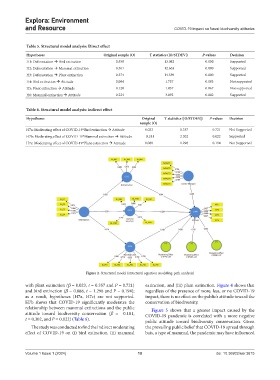
Figure 2. Structural model (structural equation modeling-path analysis)
with plant extinction (b = 0.023, t = 0.357 and P = 0.721) extinction, and (iii) plant extinction. Figure 4 shows that
and bird extinction (b = 0.088, t = 1.298 and P = 0.194); regardless of the presence of more, less, or no COVID-19
as a result, hypotheses (H7a, H7c) are not supported. impact, there is no effect on the public’s attitude toward the
H7b shows that COVID-19 significantly moderates the conservation of biodiversity.
relationship between mammal extinctions and the public Figure 5 shows that a greater impact caused by the
attitude toward biodiversity conservation (b = −0.181, COVID-19 pandemic is correlated with a more negative
t = 0.302, and P = 0.022) (Table 6).
public attitude toward biodiversity conservation. Given
The study was conducted to find the indirect moderating the prevailing public belief that COVID-19 spread through
effect of COVID-19 on (i) bird extinction, (ii) mammal bats, a type of mammal, the pandemic may have influenced
Volume 1 Issue 1 (2024) 10 doi: 10.36922/eer.3615

