


Page 52 - EER-2-3
P. 52
Explora: Environment
            and Resource                                                        Maize–pigeon pea intercropping in Ghana


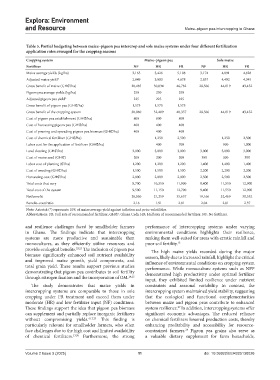
            Table 5. Partial budgeting between maize–pigeon pea intercrop and sole maize systems under four different fertilization
            application rates averaged for the cropping seasons
            Cropping system                                   Maize–pigeon pea               Sole maize
            Fertilizer                                    NF       HR        FR        NF       HR       FR
            Maize average yields (kg/ha)                 3,165     3,426    5,198     3,174    4,891    4,828
            Adjusted maize yield*                        2,849     3,083    4,678     2,857    4,402    4,345
            Gross benefit of maize (GH₵/ha)              28,485   30,834    46,782    28,566   44,019   43,452
            Pigeon pea average yields (kg/ha)             250      250       250        -        -        -
            Adjusted pigeon pea yield*                    225      225       225        -        -        -
            Gross benefit of pigeon pea (GH₵/ha)         1,575     1,575    1,575       -        -        -
            Gross benefit of the cropping system         30,060   32,409    48,357    28,566   44,019   43,452
            Cost of pigeon pea establishment (GH₵/ha)     800      800       800        -        -        -
            Cost of harvesting pigeon pea (GH₵/ha)        400      400       400        -        -        -
            Cost of pruning and spreading pigeon pea biomass (GH₵/ha)   400  400  400   -        -        -
            Cost of chemical fertilizer (GH₵/ha)           -       1,250    2,500       -      1,250    2,500
            Labor cost for the application of fertilizer (GH₵/ha)  -  400    700        -       900     1,000
            Land clearing (GH₵/ha)                       3,000     3,000    3,000     3,000    3,000    3,000
            Cost of maize seed (GH₵)                      200      200       200       300      300      300
            Labor cost of planting (₵/ha)                1,200     1,200    1,200     1,400    1,400    1,400
            Cost of weeding (GH₵/ha)                     1,500     1,500    1,500     2,200    2,200    2,200
            Harvesting cost (GH₵/ha)                     2,000     2,000    2,000     2,500    2,500    2,500
            Total costs that vary                        8,700    10,350    11,900    9,400    11,550   12,900
            Total cost of the system                     9,500    11,150    12,700    9,400    11,550   12,900
            Net benefit                                  20,560   21,259    35,657    19,166   32,469   30,552
            Benefit−cost/ratio                            2.16     1.91      2.81      2.04     2.81     2.37
            Note: Asterisk (*) represents 10% of maize average yield against inflation and price volatilities.
            Abbreviations: FR: Full rate of recommended fertilizer; GH₵/: Ghana Cedi; HR: Half rate of recommended fertilizer; NF: No fertilizer.

            and resilience challenges faced by smallholder farmers   performance of intercropping systems under varying
            in Ghana. The findings indicate that intercropping   environmental conditions highlights  their resilience,
            systems are more productive and sustainable than   making them well-suited for areas with erratic rainfall and
            monocultures,  as they  efficiently  utilize  resources  and   poor soil fertility. 15
            provide ecological benefits. 22,23  The inclusion of pigeon pea   The high maize  yields recorded during the major
            biomass significantly enhanced soil nutrient availability   season, likely due to increased rainfall, highlight the critical
            and improved maize growth, yield components, and   influence of environmental conditions on cropping system
            total grain yield. These results support previous studies   performance. While monoculture systems such as NPP
            demonstrating that pigeon pea contributes to soil fertility   demonstrated high productivity under optimal fertilizer
            through nitrogen fixation and the incorporation of OM. 24,25  input, they exhibited limited resilience under nutrient
              The study demonstrates that maize yields in      constraints  and  seasonal  variability. In  contrast,  the
            intercropping systems are comparable to those in sole   intercropping system maintained yield stability, suggesting
            cropping under FR treatment and exceed them under   that  the  ecological  and  functional  complementarities
            moderate (HR) and low fertilizer input (NF) conditions.   between maize and pigeon peas contribute to enhanced
            These findings support the idea that pigeon pea biomass   system resilience.  In addition, intercropping systems offer
                                                                             27
            can supplement and partially replace inorganic fertilizers   significant economic advantages. The reduced reliance
            without compromising yields. 4,12,23   This  finding  is   on chemical fertilizers lowered production costs, thereby
            particularly  relevant for  smallholder  farmers, who  often   enhancing profitability and accessibility for resource-
            face challenges due to the high cost and limited availability   constrained farmers.  Pigeon pea grains also serve as
                                                                                28
            of chemical fertilizers. 13,26  Furthermore, the strong   a valuable dietary supplement for farm households,


            Volume 2 Issue 3 (2025)                         11                          doi: 10.36922/EER025130026

