


Page 120 - EJMO-9-1
P. 120
Eurasian Journal of Medicine and
            Oncology
                                                                                         HEART and SYNTAX scores


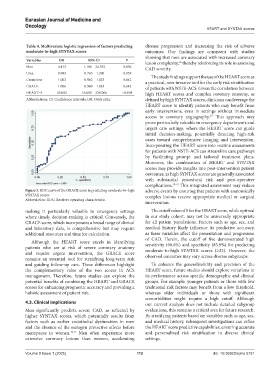
            Table 4. Multivariate logistic regression of factors predicting   disease progression and increasing the risk of adverse
            moderate‑to‑high SYNTAX scores                     outcomes. Our findings are consistent with studies
                                                               showing that men are associated with increased coronary
            Variables     OR           95% CI          P       lesion complexity,  thereby reinforcing its role in assessing
                                                                             12
            Men           4.412      1.186 – 24.332  0.036     CAD severity.
            Urea          0.993      0.765 – 1.290   0.959
                                                                 The study findings support the use of the HEART score as
            Creatinine    1.002      0.982 – 1.023   0.842     a practical, non-invasive tool for the early risk stratification
            GRACE         1.006      0.980 – 1.033   0.642     of patients with NSTE-ACS. Given the correlation between
            HEART≥5      63.002     16.603 – 239.066  <0.001   high HEART scores and complex coronary anatomy, as
            Abbreviations: CI: Confidence intervals; OR: Odds ratio.  defined by high SYNTAX scores, clinicians can leverage the
                                                               HEART score to identify patients who may benefit from
                                                               early interventions, even in settings without immediate
                                                               access  to  coronary  angiography.¹⁵  This  approach  may
                                                               prove particularly valuable in emergency departments and
                                                               urgent care settings, where the HEART score can guide
                                                               initial decision-making, potentially directing high-risk
                                                               cases  toward  comprehensive  imaging  and  intervention.
                                                               Incorporating the HEART score into routine assessments
                                                               for patients with NSTE-ACS can streamline care pathways
                                                               by facilitating prompt and tailored treatment plans.
                                                               Moreover, the combination of HEART and SYNTAX
                                                               scores may provide insights into post-intervention patient
                                                               outcomes, as high SYNTAX scores are generally associated
                                                               with substantial procedural risk and post-operative
                                                               complications. 13-15  This integrated assessment may reduce
            Figure 3. ROC curve of the GRACE score in predicting moderate-to-high   adverse events by ensuring that patients with anatomically
            SYNTAX scores                                      complex lesions receive appropriate medical or surgical
            Abbreviation: ROC: Receiver operating characteristic.
                                                               intervention.
            making it particularly valuable in emergency settings   The cutoff value of 5 for the HEART score, while optimal
            where timely decision-making is critical. Conversely, the   in our study cohort, may not be universally appropriate
            GRACE score, which incorporates a broad range of clinical   for all patient populations. Factors such as age, sex, and
            and laboratory data, is comprehensive but may require   medical history likely influence its predictive accuracy,
            additional resources and time for calculation.     as these variables affect the presentation and progression
                                                               of  CAD.  Herein,  the  cutoff  of  five  demonstrated  high
              Although the HEART score excels in identifying
            patients who are at risk of severe coronary anatomy   sensitivity (90.6%) and specificity (83.9%) for predicting
            and require urgent intervention, the GRACE score   moderate-to-high  SYNTAX  scores  (≥23).  However,  the
            remains an essential tool for stratifying long-term risk   observed outcomes may vary across diverse subgroups.
            and guiding follow-up care. These differences highlight   To enhance the generalizability and precision of the
            the complementary roles of the two scores in ACS   HEART score, future studies should explore variations in
            management.  Therefore,  future studies  can  explore the   its performance across specific demographic and clinical
            potential benefits of combining the HEART and GRACE   groups. For example, younger patients or those with few
            scores for enhancing prognostic accuracy and providing a   traditional risk factors may benefit from a low threshold,
            holistic assessment of patient risk.               whereas older individuals or those with significant
                                                               comorbidities might require a  high cutoff. Although
            4.3. Clinical implications                         our  current  analysis  does  not  include  detailed  subgroup
            Men significantly predicts severe CAD, as reflected by   evaluations, this remains a critical area for future research.
            higher SYNTAX scores, which potentially results from   By stratifying patients based on variables such as age, sex,
            factors such as earlier endothelial dysfunction in men   and medical history, subsequent investigations can refine
            and the absence of the estrogen protective effects before   the HEART score predictive capabilities, ensuring accurate
            menopause in women. 10,11  Men often experience more   and personalized risk stratification in diverse clinical
            extensive coronary lesions than women, accelerating   settings.


            Volume 9 Issue 1 (2025)                        112                              doi: 10.36922/ejmo.5731

