


Page 136 - EJMO-9-1
P. 136
Eurasian Journal of Medicine and
            Oncology
                                                                             Oncology care with AI chatbots and assistants


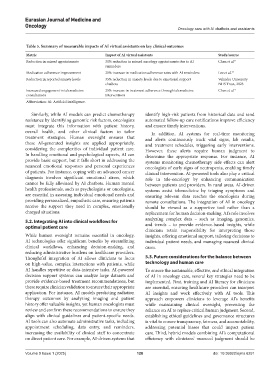
            Table 5. Summary of measurable impacts of AI virtual assistants on key clinical outcomes
            Metric                            Impact of AI virtual assistants                 Study/source
            Reduction in missed appointments  30% reduction in missed oncology appointments due to AI   Chen et al. 9
                                              reminders
            Medication adherence improvement  20% increase in medication adherence rates with AI reminders  Lee et al. 17
            Reduction in reported anxiety levels  35% reduction in anxiety levels due to emotional support   Velindre University
                                              chatbots                                        NHS Trust, 2023
            Increased engagement in telemedicine   25% increase in treatment adherence through telemedicine   Chen et al. 9
            consultations                     interventions
            Abbreviation: AI: Artificial intelligence.


              Similarly, while AI models can predict chemotherapy   identify high-risk patients from historical data and send
            resistance by identifying genomic risk factors, oncologists   automated follow-up care notifications improve efficiency
            must integrate this information with patient history,   and ensure timely interventions.
            overall health, and other clinical factors to tailor   In addition, AI systems for real-time monitoring
            treatment strategies. Human oversight ensures that   and alerts continuously track vital signs, lab results,
            these  AI-generated  insights  are  applied  appropriately,   and treatment schedules, triggering early interventions.
            considering the complexities of individual patient care.   However, these alerts require human judgment to
            In handling emotional and psychological aspects, AI can   determine the appropriate response. For instance, AI
            provide basic support, but it falls short in addressing the   systems  monitoring  chemotherapy side  effects  can alert
            nuanced emotional responses and personal experiences   oncologists of early signs of neutropenia, enabling timely
            of patients. For instance, coping with an advanced cancer   clinical intervention. AI-powered tools also play a critical
            diagnosis involves significant emotional stress, which   role in tele-oncology by enhancing communication
            cannot be fully alleviated by AI chatbots. Human mental   between patients and providers. In rural areas, AI-driven
            health professionals, such as psychologists or oncologists,   systems assist telemedicine by triaging symptoms and
            are essential in assessing individual emotional needs and   ensuring relevant data reaches the oncologists during
            providing personalized, empathetic care, ensuring patients   remote consultations. The integration of AI in oncology
            receive the support they need in complex, emotionally   should  be  viewed  as  a  supportive  tool  rather  than  a
            charged situations.                                replacement for human decision-making. AI’s role involves
                                                               analyzing complex data – such as imaging, genomics,
            5.2. Integrating AI into clinical workflows for
            optimal patient care                               and  trends  –  to  provide  evidence-based  insights,  while
                                                               clinicians retain responsibility for interpreting those
            While  human oversight  remains essential  in oncology,   insights, offering emotional support, tailoring decisions to
            AI technologies offer significant benefits by streamlining   individual patient needs, and managing nuanced clinical
            clinical workflows, enhancing decision-making, and   cases.
            reducing administrative burdens on healthcare providers.
            Thoughtful integration of AI allows clinicians to focus   5.3. Future considerations for the balance between
            on high-value, complex interactions with patients, while   technology and human care
            AI handles repetitive or data-intensive tasks. AI-powered   To ensure the sustainable, effective, and ethical integration
            decision support systems can analyze large datasets and   of AI in oncology care, several key strategies need to be
            provide evidence-based treatment recommendations, but   implemented. First, training and AI literacy for clinicians
            these require clinician validation to ensure their appropriate   are essential, ensuring healthcare providers can interpret
            application. For instance, AI models predicting radiation   AI insights and work effectively with AI tools. This
            therapy outcomes by analyzing imaging and patient   approach empowers clinicians to leverage AI’s benefits
            history offer valuable insights, yet human oncologists must   while maintaining clinical oversight, preventing the
            review and confirm these recommendations to ensure they   reliance on AI to replace critical human judgment. Second,
            align with clinical guidelines and patient-specific needs.   establishing ethical guidelines and governance structures
            AI tools can also automate administrative tasks, including   is vital to ensure transparency, fairness, and accountability,
            appointment scheduling, data entry, and reminders,   addressing potential biases that could impact patient
            increasing  the  availability  of  clinical  staff  to  concentrate   care. Third, hybrid models combining AI’s computational
            on direct patient care. For example, AI-driven systems that   efficiency with clinicians’ nuanced judgment should be


            Volume 9 Issue 1 (2025)                        128                              doi: 10.36922/ejmo.6251

