


Page 113 - EJMO-9-2
P. 113
Eurasian Journal of
            Medicine and Oncology                                                           UGVAE of breast lesions


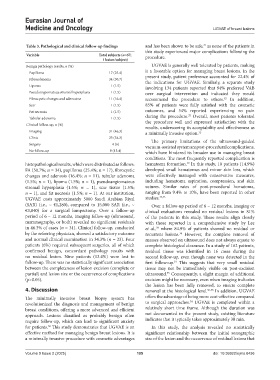
            Table 3. Pathological and clinical follow-up findings  and has been shown to be safe,  as none of the patients in
                                                                                        31
                                                               this study experienced major complications following the
            Variable                       Total subjects (n=67;   procedure.
                                             1 lesion/subject)
            Benign pathology results, n (%)                      UGVAE is generally well tolerated by patients, making
             Papilloma                         17 (25.4)       it a favorable option for managing breast lesions. In the
             Fibroadenoma                      34 (50.7)       present study, patient preference accounted for 22.4% of
                                                               the  indications  for  UGVAE.  Similarly,  a  separate  study
             Lipoma                             1 (1.5)        involving 134 patients reported that 94% preferred VAB
             Pseudoangiomatous stromal hyperplasia  1 (1.5)    over surgical intervention and indicated they would
             Fibrocystic changes and adenosine  11 (16.4)      recommend the procedure to others.  In addition,
                                                                                                32
             Scar                               1 (1.5)        85% of patients were fully satisfied with the cosmetic
             Fat necrosis                       1 (1.5)        outcomes,  and 54%  reported experiencing  no  pain
                                                                                 32
             Tubular adenoma                    1 (1.5)        during the procedure.  Overall, most patients tolerated
            Clinical follow-up, n (%)                          the  procedure  well  and  expressed  satisfaction  with  the
                                                               results, underscoring its acceptability and effectiveness as
             Imaging                           31 (46.3)
                                                               a minimally invasive option. 32
             Clinic                            23 (34.3)
                                                                 The primary limitations of the ultrasound-guided
             Surgery                             4 (6)
                                                               vacuum-assisted system are post-procedural complications,
             No follow-up                       9 (13.4)       which have hindered its broader use in managing breast
                                                               conditions. The most frequently reported complication is
            histopathological results, which were distributed as follows:   hematoma formation.  In this study, 10 patients (14.9%)
                                                                                29
            FA (50.7%; n = 34), papilloma (25.4%; n = 17), fibrocystic   developed small hematomas and minor skin loss, which
            changes and adenosis (16.4%; n = 11), tubular adenoma   were effectively managed with conservative measures,
            (1.5%; n = 1), lipoma (1.5%; n = 1), pseudoangiomatous   including hematoma aspiration, compression, and skin
            stromal hyperplasia (1.5%;  n = 1), scar tissue (1.5%;   sutures. Similar rates of post-procedural hematoma,
            n = 1), and fat necrosis (1.5%; n = 1). At our institution,   ranging from 9.4% to 10%, have been reported in other
            UGVAE costs approximately 5000 Saudi Arabian Riyal   studies. 29,33
            (SAR)  (i.e.,  ~  €1,280),  compared  to  15,000  SAR  (i.e.,  ~   Over a follow-up period of 6 – 12 months, imaging or
            €3,840) for a surgical lumpectomy. Over a follow-up   clinical evaluations revealed no residual lesions in 81%
            period of 6 – 12 months, imaging follow-up (ultrasound,   of the patients in this study. These results align closely
            mammography, or both) revealed no significant residuals   with those reported in a comprehensive study by Lee
            in 46.3% of cases (n = 31). Clinical follow-up, conducted   et al.,   where 84.9%  of  patients showed no  residual  or
                                                                   34
            by the referring physician, showed a satisfactory outcome   recurrent lesions.  However, the complete removal of
                                                                             34
            and normal clinical examination in 34.3% (n = 23). Four   masses observed on ultrasound does not always equate to
            patients (6%) required subsequent surgeries, all of which   complete histological clearance. In a study of 162 patients,
            confirmed benign, concordant pathology results with   residual tissue was identified in 16  cases during the
            no residual lesion. Nine patients (13.4%) were lost to   second follow-up, even though none was detected in the
            follow-up. There was no statistically significant association   first follow-up.  This suggests that very small residual
                                                                           31
            between the completeness of lesion excision (complete or   tissue may not be immediately visible on post-excision
            partial) and lesion size or the occurrence of complications   ultrasound.  Consequently, a slight margin of additional
                                                                        35
            (p>0.05).                                          excision might be necessary, even when imaging indicates
                                                               the lesion has been fully removed, to ensure complete
            4. Discussion                                      removal at the histological level. 36-38  In addition, UGVAE
            The minimally invasive breast biopsy system has    offers the advantage of being more cost-effective compared
                                                                                  34
            revolutionized the diagnosis and management of benign   to surgical approaches.  UGVAE is completed within a
            breast conditions, offering a more advanced and efficient   relatively short time frame. Although the duration was
            approach. Lesions classified as probably benign often   not documented in the present study, existing literature
            require follow-up, which can lead to significant anxiety   indicates that it typically takes approximately 30 min.
            for patients.  This study demonstrates that UGVAE is an   In this study, the analysis revealed no statistically
                     30
            effective method for managing benign breast lesions. It is   significant relationship between the initial sonographic
            a minimally invasive procedure with cosmetic advantages   size of the lesion and the occurrence of residual lesions that


            Volume 9 Issue 2 (2025)                        105                              doi: 10.36922/ejmo.8436

