


Page 236 - EJMO-9-2
P. 236
Eurasian Journal of
            Medicine and Oncology                                                Quercetin effects in rats with liver injury


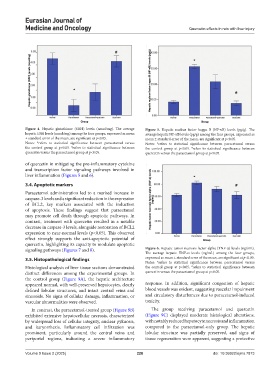
            Figure  4. Hepatic glutathione (GSH) levels (nmol/mg). The average   Figure  5. Hepatic nuclear factor kappa B (NF-κB) levels (pg/g). The
            hepatic GSH levels (nmol/mg) among the four groups, expressed as mean   average hepatic NF-κB levels (pg/g) among the four groups, expressed as
            ± standard error of the mean, are significant at p<0.05.   mean ± standard error of the mean, are significant at p<0.05.
            Notes:  *refers  to  statistical  significance  between  paracetamol  versus   Notes:  *refers  to  statistical  significance  between  paracetamol  versus
            the control group at  p<0.05.  refers to statistical significance between   the control group at  p<0.05.  refers to statistical significance between
                               #
                                                                                  #
            quercetin versus the paracetamol group at p<0.05.  quercetin versus the paracetamol group at p<0.05.
            of quercetin in mitigating the pro-inflammatory cytokine
            and transcription factor signaling pathways involved in
            liver inflammation (Figures 5 and 6).
            3.4. Apoptotic markers
            Paracetamol administration led to a marked increase in
            caspase-3 levels and a significant reduction in the expression
            of BCL2, key markers associated with the induction
            of apoptosis. These findings suggest that paracetamol
            may promote cell death through apoptotic pathways. In
            contrast, treatment with quercetin resulted in a notable
            decrease in caspase-3 levels, alongside restoration of BCL2
            expression to near-normal levels (p<0.05). This observed
            effect strongly  supports  the anti-apoptotic potential  of
            quercetin, highlighting its capacity to modulate apoptotic
            signaling pathways (Figures 7 and 8).              Figure 6. Hepatic tumor necrosis factor-alpha (TNF-α) levels (ng/mL).
                                                               The average hepatic TNF-α levels (ng/mL) among the four groups,
            3.5. Histopathological findings                    expressed as mean ± standard error of the mean, are significant at p<0.05.
                                                               Notes:  *refers  to  statistical  significance  between  paracetamol  versus
            Histological analysis of liver tissue sections demonstrated   the control group at  p<0.05.  refers to statistical significance between
                                                                                  #
            distinct  differences  among the  experimental  groups.  In   quercetin versus the paracetamol group at p<0.05.
            the  control  group  (Figure  9A),  the  hepatic  architecture
            appeared normal, with well-preserved hepatocytes, clearly   response. In addition, significant congestion of hepatic
            defined lobular structures, and intact central veins and   blood vessels was evident, suggesting vascular impairment
            sinusoids. No signs of cellular damage, inflammation, or   and circulatory disturbances due to paracetamol-induced
            vascular abnormalities were observed.              toxicity.

              In contrast, the paracetamol-treated group (Figure 9B)   The group receiving paracetamol and quercetin
            exhibited extensive hepatocellular necrosis, characterized   (Figure  9C) displayed moderate histological alterations,
            by widespread loss of cellular integrity, nuclear pyknosis,   with notably reduced hepatocyte necrosis and inflammation
            and karyorrhexis. Inflammatory cell infiltration was   compared to the paracetamol-only group. The hepatic
            prominent, particularly around the central veins and   lobular structure was partially preserved, and signs of
            periportal regions, indicating a severe inflammatory   tissue regeneration were apparent, suggesting a protective


            Volume 9 Issue 2 (2025)                        228                              doi: 10.36922/ejmo.7873

