


Page 261 - EJMO-9-2
P. 261
Eurasian Journal of
            Medicine and Oncology                                          The genetics of chronic stress in cervical lesions


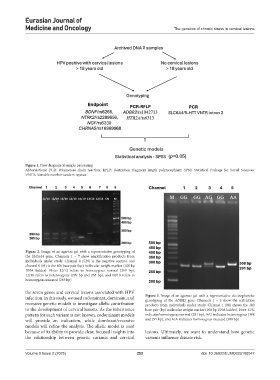
            Figure 1. Flow diagram of sample processing
            Abbreviations: PCR: Polymerase chain reaction; RFLP: Restriction fragment length polymorphism; SPSS: Statistical Package for Social Sciences;
            VNTR: Variable number tandem repeats


            Figure 2. Image of an agarose gel with a representative genotyping of
            the  SLC6A4 gene. Channels 1 – 7 show amplification products from
            individuals under study. Channel 8 (CN) is the negative control, and
            channel 9 (M) is the 100 base pair (bp) molecular weight marker (100 bp
            DNA ladder). Note: 12/12 refers to homozygous normal (299  bp),
            12/10 refers to heterozygous (299 bp and 265 bp), and 10/10 refers to
            homozygous mutated (265 bp)

            the seven genes and cervical lesions associated with HPV
            infection. In this study, we used codominant, dominant, and   Figure 3. Image of an agarose gel with a representative electrophoretic
                                                               genotyping of the  ADRB2 gene.  Channels 1 – 5 show the restriction
            recessive genetic models to investigate allelic contribution   products from individuals under study. Channel 1 (M) shows the 100
            to the development of cervical lesions. As the inheritance   base pair (bp) molecular weight marker (100 bp DNA ladder). Note: G/G
            pattern for each variant is not known, codominant models   indicates homozygous normal (291 bp), A/G indicates heterozygous (308
            will  provide  an  indication,  while  dominant/recessive   and 291 bp), and A/A indicates homozygous mutated (308 bp)
            models will refine the analysis. The allelic model is used
            because of its ability to provide clear, focused insights into   lesions.  Ultimately,  we  want  to  understand  how  genetic
            the relationship between genetic variants and cervical   variants influence disease risk.


            Volume 9 Issue 2 (2025)                        253                         doi: 10.36922/EJMO025100047

