


Page 170 - EJMO-9-3
P. 170
Eurasian Journal of
            Medicine and Oncology                                                 Psychological care for cancer patients


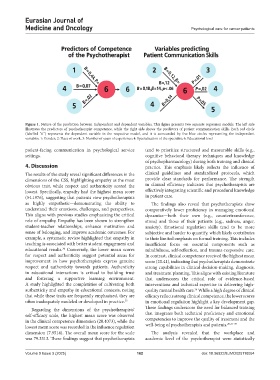
            Figure 1. Nature of the prediction between independent and dependent variables. This figure presents two separate regression models. The left side
            illustrates the predictors of psychotherapist competence, while the right side shows the predictors of patient communication skills. Each red circle
            (labelled “6”) represents the dependent variable in the respective model, and it is surrounded by five blue circles representing the independent
            variables: 1: Gender; 2: Place of work, 3: Number of years of experience; 4: Specialization of the specialist; 6: Educational level

            patient-facing communication in psychological service   tend  to  prioritize  structured  and  measurable  skills  (e.g.,
            settings.                                          cognitive behavioral therapy techniques and knowledge
                                                               of psychopharmacology) during both training and clinical
            4. Discussion                                      practice. This emphasis likely reflects the influence of

            The results of the study reveal significant differences in the   clinical guidelines and standardized protocols, which
            dimensions of the CSS, highlighting empathy as the most   provide  clear  standards for  performance. The  strength
            obvious trait, while respect and authenticity scored the   in  clinical  efficiency indicates that  psychotherapists  are
            lowest. Specifically, empathy had the highest mean score   effectively integrating scientific and procedural knowledge
            (54.1976), suggesting that patients view psychotherapists   in patient care.
            as highly empathetic—demonstrating the ability to    The findings also reveal that psychotherapists show
            understand their emotions, challenges, and perspectives.   comparatively lower proficiency in managing emotional
            This aligns with previous studies emphasizing the critical   dynamics—both  their  own (e.g.,  countertransference,
            role of empathy. Empathy has been shown to strengthen   stress)  and  those  of  their  patients  (e.g., sadness, anger,
            student-teacher relationships, enhance motivation and   anxiety). Emotional regulation skills tend to be more
            sense of belonging, and improve academic outcomes. For   subjective and harder to quantify, which likely contributes
            example, a systematic review highlighted that empathy in   to their limited emphasis on formal training. This includes
            teaching is associated with better student engagement and   insufficient focus on essential components such as
                            34
            educational results.  Conversely, the lower mean scores   mindfulness, self-reflection, and trauma-responsive care.
            for respect and authenticity suggest potential areas for   In contrast, clinical competence received the highest mean
            improvement in how psychotherapists express genuine   score (20.41), indicating that psychotherapists demonstrate
            respect and authenticity towards patients. Authenticity   strong capabilities in clinical decision-making, diagnosis,
            in educational interactions is critical to building trust   and treatment planning. This aligns with existing literature
            and fostering a supportive learning environment.   that underscores the critical role of evidence-based
            A study highlighted the complexities of cultivating both   interventions and technical expertise in delivering high-
            authenticity and empathy in educational contexts, noting   quality mental health care.  While a high degree of clinical
                                                                                    36
            that while these traits are frequently emphasized, they are   efficacy reflects strong clinical competence, the lower scores
            often inadequately modeled or developed in practice. 35  in emotional regulation highlight a key development gap.
              Regarding the dimensions of the psychotherapists’   These findings underscore the need for balanced training
            self-efficacy scale, the highest mean score was observed   that integrates both technical proficiency and emotional
            in the clinical competence dimension (20.4073), while the   competencies to improve the quality of treatment and the
                                                                                                  20,37-39
            lowest mean score was recorded in the influence regulation   well-being of psychotherapists and patients.
            dimension (7.9514). The overall mean score for the scale   The analysis revealed that the workplace and
            was 79.3313. These findings suggest that psychotherapists   academic level of the psychotherapist were statistically


            Volume 9 Issue 3 (2025)                        162                         doi: 10.36922/EJMO025110054

