


Page 57 - ESAM-1-1
P. 57
Engineering Science in
            Additive Manufacturing                                                Additive manufacturing of EH36 steels


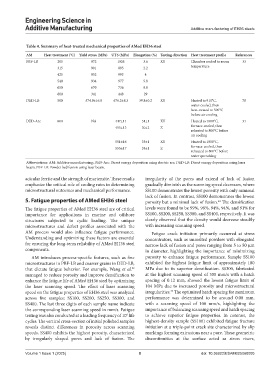
            Table 4. Summary of heat‑treated mechanical properties of AMed EH36 steel
            AM      Heat treatment (°C)  Yield stress (MPa)  UTS (MPa)  Elongation (%) Testing direction  Heat treatment profile  References
            PBF-LB       205            972        1026       3.6    XY           Chamber cooled to room   33
                         315            901        895        2.2                 temperature
                         425            952        993         4
                         540            934        977        5.8
                         650            670        736        9.8
                         800            341        448        29
            DED-LB       500         574.9±16.0  676.2±8.3  39.8±0.2  XY          Heated to 910°C,      78
                                                                                  water-cooled, then
                                                                                  heat-treated to 500°C
                                                                                  before air cooling
            DED-Arc      800            NA        447±11     34±1    XY           Heated to 1000°C,     31
                                                  455±13     30±2    Z            furnace-cooled, then
                                                                                  reheated to 800°C before
                                                                                  air cooling
                                                  551±16     35±1    XY           Heated to 1000°C,
                                                  555±17     33±1    Z            furnace-cooled, then
                                                                                  reheated to 800°C before
                                                                                  water quenching
            Abbreviations: AM: Additive manufacturing; DED-Arc: Direct energy deposition using electric arc; DED-LB: Direct energy deposition using laser
            beam; PBF-LB: Powder bed fusion using laser beam.

            acicular ferrite and the strength of martensite. These results   irregularity of the pores and extend of lack of fusion
            emphasize the critical role of cooling rates in determining   gradually diminish as the scanning speed decreases, where
            microstructural outcomes and mechanical performance.  SS100 demonstrates the lowest porosity with only minimal
                                                               lack of fusion. In contrast, SS100 demonstrates the lowest
            5. Fatigue properties of AMed EH36 steel           porosity but a minimal lack of fusion.  The densification
                                                                                              34
            The fatigue properties of AMed EH36 steel are of critical   levels were found to be 99%, 98%, 94%, 94%, and 91% for
            importance for applications  in marine and  offshore   SS100, SS200, SS250, SS300, and SS400, respectively. It was
            structures subjected to cyclic loading. The unique   clearly observed that the density would decrease steadily
            microstructures and defect profiles associated with the   with increasing scanning speed.
            AM process would also influence fatigue performance.   Fatigue crack initiation primarily occurred at stress
            Understanding and optimizing these factors are essential   concentrators, such as unmelted powders with elongated
            for ensuring the long-term reliability of AMed EH36 steel   narrow lack of fusion and pores ranging from 5 to 50 µm
            components.                                        in diameter, highlighting the importance of minimizing

              AM introduces process-specific features, such as fine   porosity to enhance fatigue performance. Sample SS100
            microstructures in PBF-LB and coarser grains in DED-LB,   exhibited the highest fatigue limit of approximately 180
            that dictate fatigue behavior. For example, Wang  et al.    MPa due to its superior densification. SS300, fabricated
                                                         32
            managed to reduce porosity and improve densification to   at the highest scanning speed of 300 mm/s with a hatch
            enhance the fatigue life of AMed EH36 steel by optimizing   spacing of 0.12  mm, showed the lowest fatigue limit of
            the laser scanning speed. The effect of laser scanning   104 MPa due to increased porosity and microstructural
                                                                          34
            speed on the fatigue properties of EH36 steel was analyzed   irregularities.  The optimized hatch spacing for maximum
            across five samples: SS100, SS200, SS250, SS300, and   performance was determined to be around 0.08  mm,
            SS400. The last three digits of each sample name indicate   with a scanning speed of 100  mm/s, highlighting the
            the corresponding laser scanning speed in mm/s. Fatigue   importance of balancing scanning speed and hatch spacing
            testing was also conducted at a loading frequency of 10  life   to achieve superior fatigue properties. In contrast, the
                                                       6
            cycles. The vertical cross-section of initial polished samples   highest-density sample (SS100) exhibited fatigue fracture
            reveals distinct differences in porosity across scanning   initiation at a triple-point crack site characterized by slip
            speeds. SS400 exhibits the highest porosity, characterized   markings forming extrusions near a pore. These geometric
            by irregularly shaped pores and lack of fusion. The   discontinuities at the surface acted as stress risers,


            Volume 1 Issue 1 (2025)                         8                          doi: 10.36922/ESAM025060005

