


Page 37 - ESAM-1-2
P. 37
Engineering Science in
            Additive Manufacturing                                          Multi-material additive manufacturing of metals


                          A                  D                 G                 J


                          B                  E                 H                 K


                                             F
                          C                                    I                 L


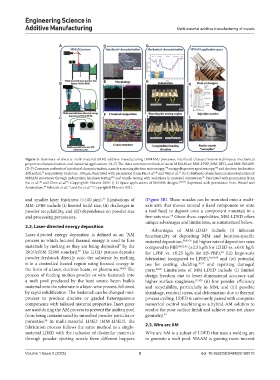
            Figure 3. Summary of discrete multi-material (MM) additive manufacturing (MMAM) processes, interfacial characterization techniques, mechanical
            properties characterization, and industrial applications. (A-C) The three common methods of metal MMAM are MM-LPBF, MM-DED, and MM-WAAM.
            (D-F) Common methods of interfacial characterization, namely scanning electron microscopy,  energy dispersive spectroscopy,  and electron backscatter
                                                                       140
                                                                                            140
            diffraction,  respectively. Scale bar: 100 µm. Reprinted with permission from Bai et al.  and Wei et al.  (G-I) Methods of mechanical characterization of
                                                                             57
                                                                   140
                   57
            MMAM structures through indentation hardness testing  and tensile testing with variations in material orientation.  Reprinted with permission from
                                                140
                                                                                       58
            Bai et al.  and Chen et al. . Copyright© Elsevier 2019. (J-L) Space applications of MMAM designs. 49,59,23  Reprinted with permission from Wessel and
                             57
                 140
            Amsterdam,  Schneck et al.,  and Gu et al.  Copyright© Elsevier 2021.
                    49
                                       23
                              59
            and smaller layer thickness (<100  μm).  Limitations of   (Figure 3B). These nozzles can be mounted onto a multi-
                                             37
            MM-LPBF include (i) limited build size, (ii) challenges in   axis arm that moves around a fixed component or onto
            powder recyclability, and (iii) dependence on powder size   a  tool  head  to deposit  onto  a component  mounted  in  a
                                                                          90
            and processing parameters.                         five-axis vice.  Given these capabilities, MM-LDED offers
                                                               unique advantages and limitations, as summarized below.
            2.2. Laser-directed energy deposition
                                                                 Advantages of MM-LDED include (i) inherent
            Laser-directed energy deposition is defined as an “AM   functionality  of  depositing  MM  and  location-specific
            process in which focused thermal energy is used to fuse   material deposition, 88,89,91  (ii) higher rate of deposition rates
            materials by melting as they are being deposited” by the   compared to PBF, 88,92,93  (±2.5 kg/h for LDED vs. ±0.01 kg/h
            ISO/ASTM 52900 standard.  The LDED process deposits   for LPBF vs. ±0.25  kg/h for EB-PBF),  (iii) large-scale
                                  87
                                                                                               94
            powder feedstock directly onto the substrate by melting   fabrication (compared to LPBF), 92,93,95  and (iv) potential
            it in a controlled heated region using focused energy in   use for coating, cladding, 96,97  and repairing damaged
            the form of a laser, electron beam, or plasma arc. 88,89  The   parts. 98,99  Limitations of MM-LDED include (i) limited
            process of feeding molten powder or wire feedstock into   design freedom due to lower-dimensional accuracy and
            a melt  pool produced by the  heat source  beam builds   higher surface roughness, 95,100  (ii) low powder efficiency
            material onto the substrate in a layer-wise process, followed   and recyclability, particularly in MM, and (iii) possible
            by rapid solidification. The feedstock can be changed mid-  shrinkage, residual stress, and deformation due to thermal
            process to produce discrete or graded heterogeneous   process cycling. LDED is commonly paired with computer
            components with tailored material properties. Inert gases   numerical control machining as a hybrid-AM solution to
            are used during the AM process to prevent the molten pool   resolve the poor surface finish and achieve near-net shape
            from being contaminated by unmelted powder particles or   geometry. 93
            porosities.  In multi-material LDED (MM-LDED), the
                    88
            fabrication process follows the same method as a single-  2.3. Wire arc AM
            material LDED with the inclusion of dissimilar materials   Wire arc AM is a subset of LDED that uses a welding arc
            through powder ejecting nozzle from different hoppers   to generate a melt pool. WAAM is gaining more interest
            Volume 1 Issue 2 (2025)                         5                          doi: 10.36922/ESAM025180010

