


Page 41 - ESAM-1-2
P. 41
Engineering Science in
            Additive Manufacturing                                          Multi-material additive manufacturing of metals


            techniques, such as near-IR cameras and optical emission     A                  B
            spectrometry, to monitor melt pool integrity and surface
            finish. Emerging approaches like 3D laser scanning have
            also been applied to detect geometric deviations during
            builds.                                                     C         D      E

              Moreover,   current  state-of-the-art  in-process
            monitoring could allow the research community to further
            characterize and advance MMAM, which will be further
            discussed in Section 6.2.                                                    F

            3. MM bimetallic interfacial
            characterization

            The microstructures at the interfaces between dissimilar
            materials play a crucial role in dictating the mechanical   G             H
            properties of MMAM components. In the context of
            bimetallic structures, the materials involved often possess
            similar atomic bonds, as well as comparable physical
            and chemical properties, including melting temperature,
            CTE, thermal conductivity, and elemental composition.
                                                         39
            Consequently, a fusion region is formed at the interface     I            J
            of dissimilar materials, facilitating  the interlocking of
            materials  and  thereby  enhancing  their  metallurgical
            bonding strength. Such insights underscore the importance
            of understanding and  optimizing  microstructural
            characteristics for the advancement of MMAM.
                                                                         K
              The  interfacial  microstructure  of  dissimilar  materials                L
            exhibits varying traits, necessitating a closer examination
            of each material’s  unique  characteristics. This  section
            explores the microstructural characteristics of significant
            bi-metal alloys, namely Ti, SS, Ni, Al, and Cu as base       M
            materials. Each of these alloys presents distinctive
            interfacial characteristics influenced by factors such
            as composition, crystalline structure, and processing
            conditions. Understanding these nuances is crucial
            for optimizing MMAM process parameter selection
            and improving  the mechanical  properties of  MMAM
            structures. Each subsection is focused on one base material
            alloy and contains a description of the relevant available
            literature.
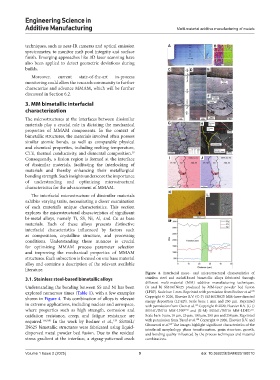
                                                               Figure  4.  Interfacial  meso-  and  microstructural  characteristics  of
            3.1. Stainless steel-based bimetallic alloys       stainless steel and nickel-based bimetallic alloys fabricated through
                                                               different multi-material (MM) additive manufacturing techniques.
            Understanding the bonding between SS and Ni has been   (A  and B) SS316/IN625 produced by MM-laser powder bed fusion
            explored numerous times (Table 1), with a few examples   (LPBF). Scale bar: 1 mm. Reprinted with permission from Bodner et al.
                                                                                                            129
            shown in Figure 4. This combination of alloys is relevant   Copyright © 2020, Elsevier B.V. (C-F) SS316/IN625 MM-laser-directed
                                                               energy deposition (LDED). Scale bars: 1  mm and 250  μm. Reprinted
            in extreme applications, including nuclear and aerospace,   with permission from Chen et al.  Copyright © 2020, Elsevier B.V. (G-J)
                                                                                    132
            where properties such as high strength, corrosion and   SS316L/IN718 MM-LPBF  and (K-M) SS316L/IN718 MM-LDED .
                                                                                                            127
                                                                                130
            oxidation resistance, creep, and fatigue resistance are   Scale bars: 5 μm, 10 μm, 25 μm, 100 μm, 200 μm and 250 μm. Reprinted
                                                                                    130
            required. 156,180  In the work by Bodner  et al.,  SS316L/  with permission from Yusuf et al.  Copyright © 2020, Elsevier B.V. and
                                                 129
                                                                         127
            IN625 bimetallic structures were fabricated using liquid-  Ghanavati et al.  The images highlight significant characteristics of the
                                                               interfacial morphology, phase transformation, grain structure, growth,
            dispersed metal powder bed fusion. Due to the residual   and bonding quality influenced by the process techniques and material
            stress gradient at the interface, a zigzag-patterned crack   combinations.
            Volume 1 Issue 2 (2025)                         9                          doi: 10.36922/ESAM025180010

