


Page 62 - ESAM-1-2
P. 62
Engineering Science in
            Additive Manufacturing                                          Multi-material additive manufacturing of metals


            A                                                  C


             B


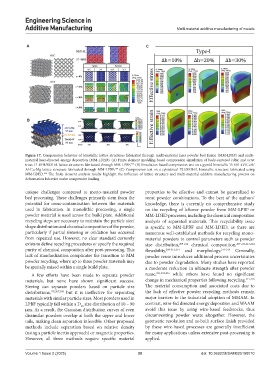
            Figure 17. Compression behavior of bimetallic lattice structures fabricated through multi-material laser powder bed fusion (MM-LPBF) and multi-
            material laser-directed energy deposition (MM-LDED). (A) Finite element modeling-based compression simulation of body-centered cubic and octet
                                                         125
            truss 17-4PH/SS316L lattice structures fabricated through MM-LPBF;  (B) Simulation-based compression test on a gyroid bimetallic Ti-6Al-4V/CuA/
                                                  199
            Al-Cu-Mg lattice structure fabricated through MM-LPBF;  (C) Compression test on a cylindrical P21/SS316L bimetallic structure fabricated using
                    166
            MM-LDED.  The finite element analysis results highlight the influence of lattice structure and multi-material additive manufacturing process on
            deformation behavior under compressive loading
            unique challenges compared to mono-material powder   properties to be effective and cannot be generalized to
            bed processing. These challenges primarily stem from the   most  powder  combinations. To the best  of the authors’
            potential for cross-contamination between the materials   knowledge, there is currently no comprehensive study
            used in fabrication. In monolithic processing, a single   on the recycling of leftover powder from MM-LPBF or
            powder material is used across the build plate. Additional   MM-LDED processes, including the chemical composition
            recycling steps are necessary to maintain the particle size/  analysis of separated materials. This recyclability issue
            shape distribution and chemical composition of the powder,   is specific to MM-LPBF and MM-LDED, as there are
            particularly if partial sintering or oxidation has occurred   numerous well-established methods for recycling mono-
            from repeated use. However, no clear standard currently   material powders to control parameters such as powder
            exists to define recycling procedures or specify the required   size distribution, 209-212  chemical composition, 209-211,213,214
            purity of chemical composition after post-processing. This   flowability, 209-212,214  and morphology. 211-214  Generally,
            lack of standardization complicates the transition to MM   powder reuse introduces additional process uncertainties
            powder recycling, where up to three powder materials may   due to powder degradation. Many studies have reported
            be spatially mixed within a single build plate.    a moderate reduction in ultimate strength after powder
              A few efforts have been made to separate powder   reuse, 211,215,216  while others have found no significant
            materials, but none have shown significant success.   change in mechanical properties following recycling. 217,218
            Sieving can separate powders based on particle size   The material consumption and associated costs due to
            distributions, 175,207,208  but it is ineffective for separating   the lack of effective powder recycling methods remain
            materials with similar particle sizes. Most powders used in   major barriers to the industrial adoption of MMAM. In
            LPBF typically fall within a D  size distribution of 10 – 90   contrast, wire-fed directed energy deposition and WAAM
                                   50
            μm. As a result, the Gaussian distribution curves of even   avoid this issue by using wire-based feedstocks, thus
            dissimilar powders overlap at both the upper and lower   circumventing powder waste altogether. However, the
            tails, making clean separation infeasible. Other proposed   geometric resolution and as-built surface finish provided
            methods include separation based on relative density   by these wire-based processes are generally insufficient
            (using a particle inertia approach) or magnetic properties.   for many applications unless extensive post-processing is
            However, all three methods require specific material   applied.


            Volume 1 Issue 2 (2025)                         30                         doi: 10.36922/ESAM025180010

