


Page 100 - GHES-1-1
P. 100
Global Health Econ Sustain                                   Effects of community-based activities on LTC needs


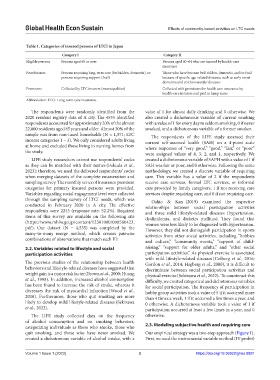
            Table 1. Categories of insured persons of LTCI in Japan
                           Category I                                  Category II
            Eligible persons  Persons aged 65 or over                 Persons aged 40–64 who are insured by health-care
                                                                      insurance
            Beneficiaries  Persons requiring long-term care (bedridden, dementia), or   Those who have become bed-ridden, dementia, and/or frail
                           persons requiring support (frail)          because of specific age-related diseases, such as early-onset
                                                                      dementia and cerebrovascular diseases
            Premiums       Collected by LTC insurers (municipalities)  Collected with premiums for health care insurance by
                                                                      health-care insurers and paid in lump sums
            Abbreviation: LTCI: Long-term care insurance.

              The respondents were randomly identified from the   value of 1 for almost daily drinking and 0 otherwise. We
            2020 resident registry data of A city. The 4535 identified   also created a dichotomous variable of current smoking
            respondents accounted for approximately 20% of the almost   with a value of 1 for every day to seldom smoking, 0 if never
            22,000 residents aged 65 years and older. Almost 30% of the   smoked, and a dichotomous variable of a former smoker.
            sample was from non-taxed households (N = 1,371; LTC   The  respondents  of  the  LIFE  study  assessed  their
            income categories 1 – 3). We only considered adults living   current  self-assessed  health  (SAH)  on  a  4-point  scale
            at home and excluded those living in nursing homes from   where responses of “very good,” “good,” “fair,” or “poor”
            the study.                                         were assigned values of 4, 3, 2, and 1, respectively. We

              LIFE study researchers cannot use respondents’ codes   created a dichotomous variable of SAPH with a value of 1 if
            as they can be matched with their names (Fukuda et al.,   SAH was fair or poor, and 0 otherwise. Following the same

            2023); therefore, we used the delivered respondents’ codes   methodology, we created a discrete variable of requiring
            when merging datasets of the complete enumeration and   care. This variable has a value of 2 if the respondents
            sampling survey. The monthly series of insurance premium   receive care services, formal LTC services, or informal
            categories for primary insured persons were provided.   care provided by family caregivers, 1 if not receiving care
            Variables regarding social engagement level were collected   services despite requiring care, and 0 if not requiring care.
            through the sampling survey of LTCI needs, which was   Oshio & Kan (2019) examined the respective

            conducted in February 2020 in A city. The effective   relationships between social participation activities
            respondents were  2243 (response rate:  52.2%).  Required   and three mild lifestyle-related diseases (hypertension,
            items of this survey are available on the following site   dyslipidemia, and diabetes mellitus). They found that
            (https://www.mhlw.go.jp/content/12301000/000560423.  women were less likely to be diagnosed with hypertension.
            pdf). Our dataset (N = 4,535) was completed by the   However, they did not distinguish participation in sports
            many-to-many merge method, which creates pairwise   activities from other social activities, including “hobbies
            combinations of observations that match each ID.
                                                               and culture,” “community events,” “support of child-
            2.2. Variables related to lifestyle and social     raising,” “support for older adults,” and “other social
            participation activities                           participation activities.” As physical exercise is associated
                                                               with mild lifestyle-related diseases (Colberg  et al., 2016;

            The  previous  studies  of  the  relationship  between  health   Gordon et al., 2014; Hagberg et al., 2000), it is difficult to
            behaviors and lifestyle-related diseases have suggested that   discriminate between social participation activities and
            weight gain is a major risk factor(Brown et al., 2000; Huang   physical exercise(Sekizawa et al., 2022). To counteract this


            et al., 1998). In addition, increased alcohol consumption   difficulty, we created categorical and dichotomous variables
            has been found to increase the risk of stroke, whereas it   for social participation. The frequency of participation in
            decreases the risk of myocardial infarction (Wood et al.,   hobby group activities took a value of 5 if it occurred more

            2018). Furthermore, those who quit smoking are more   than 4 times a week, 1 if it occurred a few times a year, and
            likely to develop mild lifestyle-related diseases (Sekizawa   0 otherwise. A dichotomous variable took a value of 1 if

            et al., 2022).                                     participation occurred at least a few times in a year, and 0
              The LIFE study collected data on the frequency   otherwise.
            of alcohol consumption and on smoking behaviors,
            categorizing individuals as those who smoke, those who   2.3. Modeling subjective health and requiring care
            quit smoking, and those who have never smoked. We   Our empirical strategy was a two-step approach (Figure 1).
            created a dichotomous variable of alcohol intake, with a   First, we used the instrumental variable method (IV probit)


            Volume 1 Issue 1 (2023)                         3                        https://doi.org/10.36922/ghes.0891

