


Page 103 - GHES-1-1
P. 103
Global Health Econ Sustain                                   Effects of community-based activities on LTC needs


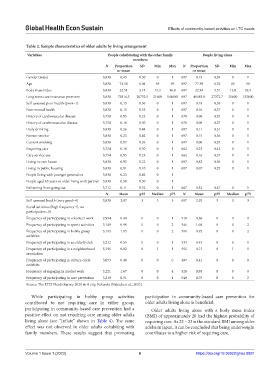
            Table 2. Sample characteristics of older adults by living arrangement
             Variables                         People cohabitating with the other family   People living alone
                                                          members
                                              N   Proportion   SD  Min   Max   N  Proportion   SD  Min   Max
                                                   or mean                         or mean
            Gender (male)                    3,838  0.45    0.50    0     1   697   0.19    0.39    0     1
            Age                              3,838  74.58   6.04   65     99  697   77.39   6.76   65     98
            Body mass index                  3,838  22.51   3.18   15.3  36.8  697  22.34   3.51   12.8  32.5
            Long-term care insurance premium  3,838  72914.5  26732.5  21600  144000 697  48483.8  27272.7  21600  132000
            Self-assessed poor health (poor=1)  3,838  0.15  0.36   0     1   697   0.18    0.38    0     1
            Poor mental health               3,838  0.15    0.35    0     1   697   0.16    0.37    0     1
            History of cardiovascular disease  3,758  0.05  0.22    0     1   678   0.06    0.25    0     1
            History of cerebrovascular disease  3,758  0.10  0.30   0     1   678   0.08    0.27    0     1
            Daily drinking                   3,838  0.26    0.44    0     1   697   0.11    0.31    0     1
            Former smoker                    3,838  0.23    0.42    0     1   697   0.15    0.36    0     1
            Current smoking                  3,838  0.07    0.26    0     1   697   0.06    0.25    0     1
            Requiring care                   3,754  0.10    0.30    0     1   662   0.23    0.42    0     1
            Care service use                 3,754  0.05    0.23    0     1   662   0.16    0.37    0     1
            Living in own house              3,838  0.95    0.22    0     1   697   0.82    0.38    0     1
            Living in public housing         3,838  0.01    0.10    0     1   697   0.07    0.25    0     1
            People living with younger generation  3,838  0.23  0.42  0   1
            People aged 65 years or older living with partner  3,838  0.50  0.50  0  1
            Refraining from going out        3,712  0.11    0.32    0     1   667   0.32    0.47    0     1
                                              N     Mean    p25   Median  p75  N    Mean    p25   Median  p75
            Self-assessed health (very good=4)  3,838  2.97  3      3     3   697   2.92     3      3     3
            Social activities (high frequency=5, no
            participation=0)
            Frequency of participating in volunteer work  2,994  0.44  0  0  1  510  0.36    0      0     0
            Frequency of participating in sports activities  3,149  0.99  0  0  2  546  1.04  0     0     2
            Frequency of participating in hobby group   3,193  1.05  0  0  2  561   0.92     0      0     2
            activities
            Frequency of participating in an elderly club  3,212  0.55  0  0  1  534  0.45   0      0     1
            Frequency of participating in a neighborhood   3,196  0.82  0  1  1  555  0.71   0      1     1
            association
            Frequency of participating in culture circle   3,053  0.40  0  0  0  497  0.41   0      0     0
            activities
            Frequency of engaging in market work  3,221  1.67  0    0     4   528   0.95     0      0     0
            Frequency of participating in care prevention  3,210  0.51  0  0  1  549  0.75   0      0     2
            Source: The LTCI Needs Survey 2020 in A city, Fukuoka (Fukuda et al., 2023).

              While participating in hobby group activities    participation in community-based care prevention for
            contributed to not requiring care in either group,   older adults living alone is beneficial.
            participating in community-based care prevention had a   Older adults living alone with a body mass index
            positive effect on not requiring care among older adults   (BMI) of approximately 20 had the highest probability of
            living alone (see “Inflate” shown in  Table  4). The same   requiring care. As 22 – 23 is the standard BMI among older
            effect was not observed in older adults cohabiting with   adults in Japan, it can be concluded that being underweight
            family members. These results suggest that promoting   contributes to a higher risk of requiring care.


            Volume 1 Issue 1 (2023)                         6                        https://doi.org/10.36922/ghes.0891

