


Page 106 - GHES-1-1
P. 106
Global Health Econ Sustain                                   Effects of community-based activities on LTC needs


                         A                                     B


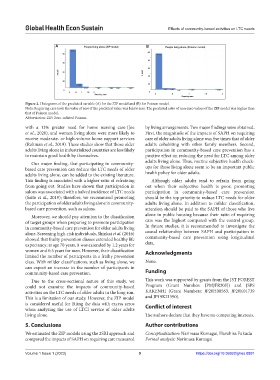
            Figure 2. Histograms of the predicted variable (A) for the ZIP model and (B) for Poisson model.
            Note: Requiring care took the value of zero if the predicted value was below zero. The predicted ratio of non-zero values of the ZIP model was higher than
            that of Poisson model.
            Abbreviation: ZIP: Zero-inflated Poisson.
            with a 13% greater need for home nursing care (Joe   by living arrangements. Two major findings were obtained.

            et al., 2020), and women living alone were more likely to   First, the magnitude of the impacts of SAPH on requiring
            receive moderate- or high-volume home support services    care of older adults living alone was five times that of older
            (Rahman et al., 2019). These studies show that those older   adults cohabiting with other family members. Second,
            adults living alone in industrialized countries are less likely   participation in community-based care prevention has a
            to maintain good health by themselves.             positive effect on reducing the need for LTC among older

              Our major finding, that participating in community-  adults living alone. Thus, routine subjective health check-
            based care prevention can reduce the LTC needs of older   ups for those living alone seem to be an important public
            adults living alone, can be added to the existing literature.   health policy for older adults.
            This finding is associated with a higher ratio of refraining   Although older adults tend to refrain from going
            from going out. Studies have shown that participation in   out when their subjective health is poor, promoting
            salons was associated with a halved incidence of LTC needs    participation in community-based care prevention
            (Saito et al., 2019); therefore, we recommend promoting   should be the top priority to reduce LTC needs for older
            the participation of older adults living alone in community-  adults living alone. In addition to milder classification,
            based care prevention, such as salons.             attention should be paid to the SAPH of those who live
              Moreover, we should pay attention to the classification   alone in public housing because their ratio of requiring
            of target groups when preparing to promote participation   care was the highest compared with the control group.
            in community-based care prevention for older adults living   In future studies, it is recommended to investigate the
            alone. Screening high-risk individuals, Shinkai et al. (2016)   causal relationship between SAPH and participation in
            showed that frailty prevention classes extended healthy life   community-based  care prevention using longitudinal
            expectancy; at age 70 years, it was extended by 1.2 years for   data.
            women and 0.5 years for men. However, their classification   Acknowledgments
            limited the number of participants in a frailty prevention
            class. With milder classifications, such as living alone, we   None.
            can expect an increase in the number of participants in
            community-based care prevention.                   Funding
              Due to the cross-sectional nature of this study, we   This work was supported by grants from the JST FOREST
            could not examine the impacts of community-based   Program (Grant Number: JPMJFR205J) and JSPS
            activities on the LTC needs of older adults in the long run.   KAKENHI (Grant Numbers: JP20H00563, JP20K01739
            This is a limitation of our study. However, the ZIP model   and JP19K21590).
            is considered useful for fitting the data with excess zeros   Conflict of interest
            when analyzing the use of LTCI service of older adults
            living alone.                                      The authors declare that they have no competing interests.
            5. Conclusions                                     Author contributions

            We estimated the ZIP models using the 2SRI approach and   Conceptualization: Narimasa Kumagai, Haruhisa Fukuda
            compared the impacts of SAPH on requiring care measured   Formal analysis: Narimasa Kumagai


            Volume 1 Issue 1 (2023)                         9                        https://doi.org/10.36922/ghes.0891

