


Page 168 - GHES-3-2
P. 168
Global Health Economics and
            Sustainability
                                                                                      Online health community reviews


                         A                                   B


                         C                                   D


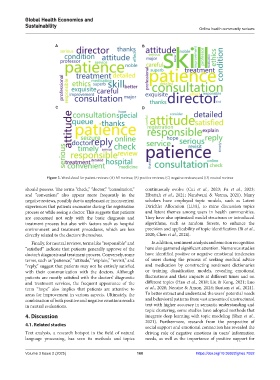
                     Figure 2. Word cloud for patient reviews: (A) All reviews; (B) positive reviews; (C) negative reviews; and (D) neutral reviews


            should possess. The terms “check,” “doctor,” “consultation,”   continuously evolve (Cui  et al., 2023; Fu  et al., 2023;
            and “convenient” also appear more frequently in the   Elbattah  et al., 2021; Nandwani & Verma, 2021). Many
            negative reviews, possibly due to unpleasant or inconvenient   scholars have employed topic models, such as Latent
            experiences that patients encounter during the registration   Dirichlet Allocation (LDA), to mine discussion topics
            process or while seeing a doctor. This suggests that patients   and latent themes among users in health communities.
            are concerned not only with the basic diagnosis and   They have also optimized model structures or introduced
            treatment  process but  also  with  factors  such  as  hospital   algorithms, such as random forests, to enhance the
            environment and treatment procedures, which are less   precision and applicability of topic identification (Bi et al.,
            directly related to the doctors themselves.        2020; Chen et al., 2024).
              Finally, for neutral reviews, terms like “responsible” and   In addition, sentiment analysis and emotion recognition
            “satisfied” indicate that patients generally approve of the   have also garnered significant attention. Numerous studies
            doctor’s diagnosis and treatment process. Conversely, some   have identified positive or negative emotional tendencies
            terms, such as “patience,” “attitude,” “explain,” “revisit,” and   of users during the process of seeking medical advice
            “reply,” suggest that patients may not be entirely satisfied   and  medication  by  constructing  sentiment  dictionaries
            with their communication with the doctors. Although   or  training  classification  models,  revealing  emotional
            patients are mostly satisfied with the doctors’ diagnostic   fluctuations and their impacts at different times and on
            and treatment services, the frequent appearance of the   different topics (Han et al., 2018; Liu & Kong, 2021; Luo
            term “hope” also implies that patients are attentive to   et al., 2020; Necaise & Amon, 2024; Rustam et al., 2021).
            areas for improvement in various aspects. Ultimately, the   To better extract and understand the users’ potential needs
            combination of both positive and negative emotions results   and behavioral patterns from vast amounts of unstructured
            in neutral evaluations.                            text with higher accuracy in semantic understanding and
                                                               topic clustering, some studies have adopted methods that
            4. Discussion                                      integrate deep learning with topic modeling (Shen et al.,
                                                               2021). Furthermore, research from the perspective of
            4.1. Related studies
                                                               social support and emotional connection has revealed the
            Text analysis, a research hotspot in the field of natural   driving role of negative emotions in users’ information
            language processing, has seen its methods and topics   needs, as well as the importance of positive support for


            Volume 3 Issue 2 (2025)                        160                       https://doi.org/10.36922/ghes.7052

