


Page 214 - GHES-3-2
P. 214
Global Health Economics and
            Sustainability
                                                                             Health behaviors during COVID-19 pandemic


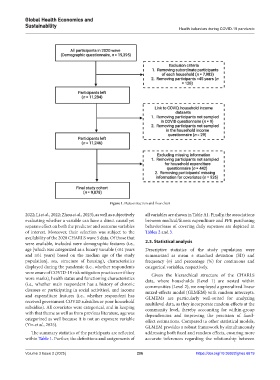
                                                Figure 1. Data extraction and flow chart

            2022; Li et al., 2022; Zhou et al., 2023), as well as subjectively   all variables are shown in Table A1. Finally, the associations
            evaluating whether a variable can have a direct causal yet   between medical/fitness expenditure and PPE purchasing
            separate effect on both the predictor and outcome variables   behavior/ease of covering daily expenses are depicted in
            of interest. Moreover, their selection was subject to the   Tables 2 and 3.
            availability of the 2020 CHARLS wave 5 data. Of those that
            were available, included were demographic features (i.e.,   2.3. Statistical analysis
            age [which was categorized as a binary variable (<61 years   Descriptive statistics of the study population were
            and ≥61  years) based on the median age of the study   summarized as mean ± standard deviation (SD) and
            population], sex, structure of housing), characteristics   frequency (n) and percentage (%) for continuous and
            displayed during the pandemic (i.e., whether respondents   categorical variables, respectively.
            were aware of COVID-19 risk mitigation practices or if they   Given the hierarchical structure of the CHARLS
            wore masks), health status and functioning characteristics   data, where households (Level 1) are nested  within
            (i.e., whether main respondent has a history of chronic   communities (Level 2), we employed a generalized linear
            diseases or participating in social activities), and income   mixed-effects model (GLMEM) with random intercepts.
            and expenditure features (i.e., whether respondent has   GLMEMs are particularly well-suited for analyzing
            received government COVID subsidies or poor household   multilevel data, as they incorporate random effects at the
            subsidies). All covariates were categorical, and in keeping   community level, thereby accounting for within-group
            with that theme as well as from previous literature, age was   dependencies and improving the precision of fixed-
            categorized as well because it is not an exposure variable   effect estimations. Compared to other statistical models,
            (Yin et al., 2025).                                GLMEM provides a robust framework by simultaneously

              The summary statistics of the participants are reflected   addressing both fixed and random effects, ensuring more
            within Table 1. Further, the definitions and assignments of   accurate inferences regarding the relationship between


            Volume 3 Issue 2 (2025)                        206                       https://doi.org/10.36922/ghes.6619

