


Page 215 - GHES-3-2
P. 215
Global Health Economics and
            Sustainability
                                                                             Health behaviors during COVID-19 pandemic


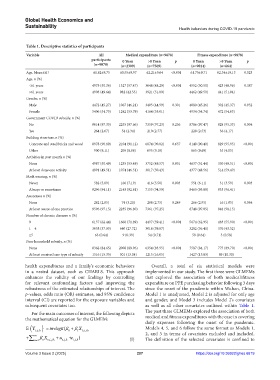
            Table 1. Descriptive statistics of participants
            Variable                       All        Medical expenditure (n=9878)   Fitness expenditure (n=9878)
                                        participants   0 Yuan   >0 Yuan    p       0 Yuan     >0 Yuan     p
                                         (n=9878)   (n=2309)    (n=7569)          (n=9014)    (n=864)

            Age, Mean±SD                 61.82±9.75  60.55±9.97  62.21±9.64  <0.001  61.75±9.71  62.54±10.13  0.023
            Age, n (%)
             <61 years                  4975 (50.36)  1327 (57.47)  3648 (48.20)  <0.001  4552 (50.50)  423 (48.96)  0.387
             >61 years                  4903 (49.64)  982 (42.53)  3921 (51.80)   4462 (49.50)  441 (51.04)
            Gender, n (%)
             Male                       4472 (45.27)  1067 (46.21)  3405 (44.99)  0.301  4080 (45.26)  392 (45.37)  0.952
             Female                     5406 (54.73)  1242 (53.79)  4164 (55.01)  4934 (54.74)  472 (54.63)
            Government COVID subsidy, n (%)
             No                         9614 (97.33)  2255 (97.66)  7359 (97.23)  0.256  8786 (97.47)  828 (95.33)  0.004
             Yes                         264 (2.67)  54 (2.34)  210 (2.77)        228 (2.53)  36 (4.17)
            Building structure, n (%)
             Concrete and steel/bricks and wood  8978 (90.89)  2104 (91.12)  6874 (90.82)  0.657  8149 (90.40)  829 (95.95)  <0.001
             Other                       900 (9.11)  205 (8.88)  695 (9.18)       865 (9.60)  35 (4.05)
            Activities in past month n (%)
             None                       4987 (50.49)  1235 (53.49)  3752 (49.57)  0.001  4637 (51.44)  350 (40.51)  <0.001
             At least done one activity  4891 (49.51)  1074 (46.51)  3817 (50.43)  4377 (48.56)  514 (59.49)
            Mask wearing, n (%)
             Never                       582 (5.89)  166 (7.19)  416 (5.50)  0.003  551 (6.11)  31 (3.59)  0.003
             Always or sometimes        9296 (94.11)  2143 (92.81)  7153 (94.50)  8463 (93.89)  833 (96.41)
            Awareness n (%)
             None                        282 (2.85)  74 (3.20)  208 (2.75)  0.249  266 (2.95)  16 (1.85)  0.064
             At least aware of one practice  9596 (97.15)  2235 (96.80)  7361 (97.25)  8748 (97.05)  848 (98.15)
            Number of chronic diseases n (%)
             0                          6157 (62.44)  1660 (71.89)  4497 (59.41)  <0.001  5674 (62.95)  483 (55.90)  <0.001
             1 – 4                      3658 (37.03)  640 (27.72)  3018 (39.87)   3282 (36.41)  376 (43.52)
             ≥5                          63 (0.64)   9 (0.39)   54 (0.71)          58 (0.64)   5 (0.58)
            Poor household subsidy, n (%)
             None                       8362 (84.65)  2008 (89.96)  6354 (83.95)  <0.001  7587 (84.17)  775 (89.70)  <0.001
             At least received one type of subsidy  1516 (15.35)  301 (13.04)  1215 (16.05)  1427 (15.83)  89 (10.30)

            health  expenditures and a  family’s economic  behaviors   Overall, a total of six statistical models were
            in a nested dataset, such as CHARLS. This approach   implemented in our study. The first three were GLMEMs
            enhances  the  validity  of  our  findings  by  controlling   that explored the association of both medical/fitness
            for relevant confounding factors and improving the   expenditure on PPE purchasing behavior following 3 days
            robustness of the estimated relationships of interest. The   since the onset of the pandemic within Wuhan, China.
            p-values, odds ratio (OR) estimates, and 95% confidence   Model 1 is unadjusted, Model 2 is adjusted for only age
            interval (CI) are reported for the exposure variables and   and gender, and Model 3 includes Model 2’s covariates
            subsequent covariates too.                         as well as all other covariates outlined within  Table  1.
              For the main outcomes of interest, the following depicts   The past three GLMEMs explored the association of both
            the mathematical equation for the GLMEM:           medical and fitness expenditures with the ease in covering
                                                               daily expenses following the onset of the pandemic.
              (
            E Y i, j, k )   invlogit=  (β  0  β +  1 X 1, , ,i jk  Models 4, 5, and 6 follow the same format as Models 1,
            +  ∑ m  2 β n X n i , ,, jk  +  u o ,, jk  e +  i ,, jk )  (I)  2, and 3 in terms of covariates excluded and  included.
                                                               The definition of the selected covariates is confined to
                n=
            Volume 3 Issue 2 (2025)                        207                       https://doi.org/10.36922/ghes.6619

