


Page 52 - GHES-3-2
P. 52
Global Health Economics and
            Sustainability
                                                                                 Aging and health facilities in Indian cities


            categorized by size and status.                    In 2001, most cities had an older population of < 8%.

              The ArcGIS software was used to map the share of   However, states such as Kerala, Tamil Nadu, and West
            the older population across Indian cities. We projected   Bengal exhibited a higher share of more than 10%. A rapid
            the share of the older population for 2021 and created an   increase in the older population was observed between
            inventory map displaying the available health facilities   2001 and 2011 across cities. The percentage of the older
            in each city and the average distance to them. Hotspot   population is expected to increase above 14% in many
            analysis was also performed to identify the major hotspots   cities across the country. Significant concentrations of the
            of aging in India. The list of indicators and subindicators   older population will be observed in states such as Kerala,
            used to compute the HFI is given below:            Tamil Nadu, West Bengal, Punjab, Delhi, and Maharashtra
                                                               and cities such as Thiruvananthapuram, Palakkad, Hugli-
            Indicators of health    Subindicators used         Chinsurah, Khardah, South DumDum, Uttarpara Kotrung,
            facilities              (Per 000 population)       and Nabadwip.
            1. Government Hospital  a. Number of Allopathic Hospitals
            2.  Allopathic Government                            Hotspot analysis reveals the geographic hotspots for the
              Hospital Alternative  b. Number of beds          older population in India (Figure  3). The southernmost
            3. Dispensary/Health Center  c. Number of doctors  and eastern parts of India emerge as the primary hotspots,
            4. T.B. Hospital/Clinic  d. Number of paramedical staff
            5. Nursing Home                                    with a 99% confidence level. These areas house a high
            6. Mobile Health Clinic                            proportion of the older population and are surrounded
            7. Others                                          by cities with similar numbers of older adults. Conversely,
                                                               the northern regions, including Punjab, Haryana, Uttar
            3. Results

            3.1. Aging pattern in Indian cities
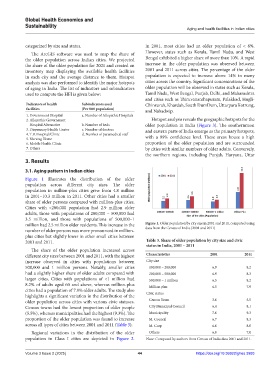
            Figure  1  illustrates  the  distribution  of  the  older
            population across different city sizes. The older
            population in million-plus cities grew from 4.8 million
            in 2001–10.3 million in 2011. Other cities had a smaller
            share of older persons compared with million-plus cities.
            Cities with <200,000 population had 2.9 million older
            adults, those with populations of 200,000 – 500,000 had
            3.5 million, and those with populations of 500,000–1
            million had 2.5 million older residents. This increase in the   Figure 1. Older population by city size in 2001 and 2011, computed using
            number of older persons was more pronounced in million-  data from the Census of India (2001 and 2011)
            plus cities but slightly lower in other small cities between
            2001 and 2011.                                     Table 3. Share of older population by city size and civic
                                                               status in India, 2001 – 2011
              The share of the older population increased across
            different city sizes between 2001 and 2011, with the highest   Characteristics  2001         2011
            increase observed in cities with populations between   City size
            500,000 and 1 million persons. Notably, smaller cities   100,000 – 200,000     6.9            8.2
            had a slightly higher share of older adults compared with   200,000 – 500,000  6.9            8.3
            larger cities. Cities with populations of <1 million had   500,000 – 1 million  6.5           8.2
            8.2% of adults aged 60 and above, whereas million-plus   Million plus          6.5            7.9
            cities had a population of 7.9% older adults. The study also
            highlights a significant variation in the distribution of the   Civic status
            older population across cities with various civic statuses.   Census Town      3.6            5.5
            Census towns had the lowest proportion of older people   City Municipal Council  6.4          8.1
            (5.5%), whereas municipalities had the highest (9.3%). The   Municipality      7.6            9.3
            proportion of the older population was found to increase   M. Council          6.7            8.3
            across all types of cities between 2001 and 2011 (Table 3).  M. Corp           6.6            8.0
              Regional  variations  in  the  distribution  of  the  older   Others         6.0            7.0
            population in Class  I cities are depicted in  Figure  2.   Note: Computed by authors from Census of India data 2001 and 2011.


            Volume 3 Issue 2 (2025)                         44                       https://doi.org/10.36922/ghes.3993

