


Page 13 - GHES-3-3
P. 13
Global Health Economics and
            Sustainability
                                                                                      Sustainable therapeutic Artemisia


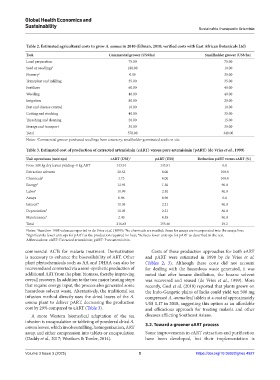
            Table 2. Estimated agricultural costs to grow A. annua in 2010 (Ellman, 2010; verified costs with East African Botanicals Ltd)
            Task                               Commercial grower (US$/ha)               Smallholder grower (US$/ha)
            Land preparation                            75.00                                   75.00
            Seed or seedlings 1                        180.00                                   10.00
            Nursery 1                                   0.00                                    30.00
            Transplant and infilling                    35.00                                   35.00
            Fertilizer                                  60.00                                   40.00
            Weeding                                     40.00                                   40.00
            Irrigation                                  80.00                                   20.00
            Pest and disease control                    10.00                                   10.00
            Cutting and stooking                        40.00                                   35.00
            Threshing and cleaning                      20.00                                   15.00
            Storage and transport                       30.00                                   30.00
            Total                                      570.00                                   340.00
            Notes:  Commercial grower purchased seedlings from a nursery; smallholder germinated seeds on site.
                 1
            Table 3. Estimated cost of production of extracted artemisinin (eART) versus pure artemisinin (pART) (de Vries et al., 1999)

            Unit operations (unit ops)          eART (US$)  1      pART (US$)        Reduction pART versus eART (%)
            From 500 kg dry leaves yielding~1 kg ART  143.91         143.91                     0.0
            Extraction solvents                    20.63              0.00                     100.0
            Chemicals 2                            1.73               0.00                     100.0
            Energy 3                               12.95              1.30                     90.0
            Labor 4                                11.99              2.40                     80.0
            Assays                                 0.96               0.96                      0.0
            Interest   4                           11.03              2.21                     80.0
            Depreciation 4                         11.03              2.21                     80.0
            Maintenance 4                          2.40               0.48                     80.0
            Total                                  216.63            153.46                    29.2
            Notes:  Based on 1998 values as reported in de Vries et al. (1999);  No chemicals are needed; those for assays are incorporated into the assays line;
                                                      2
                 1
                                                            4
            3 Significantly fewer unit ops for pART as the production required no heat;  Reflects fewer unit ops for pART as described in the text.
            Abbreviations: eART: Extracted artemisinin; pART: Pure artemisinin.
            commercial  ACTs  for  malaria  treatment.  Derivatization   Costs of these production approaches for both eART
            is necessary to enhance the bioavailability of ART. Other   and  pART  were  estimated  in  1998  by  de  Vries  et  al.
            plant phytochemicals such as AA and DHAA can also be   (Tables  2,  3). Although these costs did not account
            recovered and converted via a semi-synthetic production of   for dealing with the hazardous waste generated, it was
            additional ART from the plant biomass, thereby improving   noted that after hexane distillation, the hexane solvent
            overall recovery. In addition to the two major heating steps   was recovered and reused (de Vries  et al., 1999). More
            that require energy input, the process also generated some   recently, Goel et al. (2018) reported that plants grown on
            hazardous solvent waste. Alternatively, the traditional tea   the Indo-Gangetic plains of India could yield ten 500 mg
            infusion method directly uses the dried leaves of the A.   compressed A. annua leaf tablets at a cost of approximately
            annua plant to deliver pART, decreasing the production   US$ 0.17 in 2018, suggesting this option as an affordable
            cost by 29% compared to eART (Table 3).            and  efficacious  approach  for  treating  malaria  and  other
              A more Western biomedical adaptation of the tea   diseases afflicting Southeast Asians.
            infusion is encapsulation or tableting of powdered dried A.   3.2. Toward a greener eART process
            annua leaves, which involves milling, homogenization, ART
            assay, and either compression into tablets or encapsulation   Some improvements in eART extraction and purification
            (Daddy et al., 2017; Weathers & Towler, 2014).     have been developed, but their implementation is


            Volume 3 Issue 3 (2025)                         5                        https://doi.org/10.36922/ghes.4927

