


Page 18 - GHES-3-3
P. 18
Global Health Economics and
            Sustainability
                                                                                      Sustainable therapeutic Artemisia


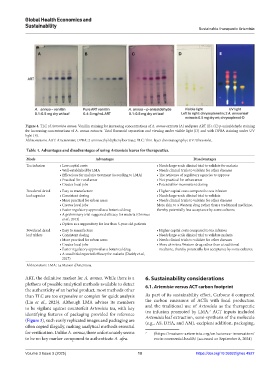
            Figure 4. TLC of Artemisia annua. Vanillin staining for increasing concentrations of A. annua extracts (A) and pure ART (B). (C) p-anisaldehyde staining
            for increasing concentrations of A. annua extracts. Total flavonoid separation and viewing under visible light (D) and with DPBA staining under UV
            light (E).
            Abbreviations: ART: Artemisinin; DPBA: 2-aminoethyl diphenylborinate; TLC: Thin-layer chromatography; UV: Ultraviolet.

            Table 4. Advantages and disadvantages of using Artemisia leaves for therapeutics.

            Mode                          Advantages                               Disadvantages
            Tea infusion  • Low capital costs                       • Needs large‑scale clinical trial to validate for malaria
                          • Well‑established by LMA                 • Needs clinical trials to validate for other diseases
                          • Efficacious for malaria treatment (according to LMA)  • The reticence of regulatory agencies to approve
                          • Practical for rural areas               • Not practical for urban areas
                          • Creates local jobs                      • Potential for inconsistent dosing
            Powdered dried   • Easy to manufacture                  • Higher capital costs compared to tea infusion
            leaf capsules  • Consistent dosing                      • Needs large‑scale clinical trial to validate
                          • More practical for urban areas          •  Needs clinical trials to validate for other diseases
                          • Creates local jobs                      More akin to a Western drug rather than a traditional medicine,
                          • Easier regulatory approval as a botanical drug  thereby potentially less acceptance by some cultures.
                          •  A preliminary trial suggested efficacy for malaria (Onimus
                           et al., 2013)
                          • Option as a suppository for less than 5‑year‑old patients
            Powdered dried   • Easy to manufacture                  • Higher capital costs compared to tea infusion
            leaf tablets  • Consistent dosing                       • Needs large‑scale clinical trial to validate malaria
                          • More practical for urban areas          • Needs clinical trials to validate for other diseases
                          • Creates local jobs                      •  More akin to a Western drug rather than a traditional
                          • Easier regulatory approval as a botanical drug  medicine, thereby potentially less acceptance by some cultures.
                          •  A small trial reported efficacy for malaria (Daddy et al.,
                           2017)
            Abbreviation: LMA: La Maison d’Artemisia.

            ART, the definitive marker for A. annua. While there is a   6. Sustainability considerations
            plethora of possible analytical methods available to detect   6.1. Artemisia versus ACT carbon footprint
            the authenticity of an herbal product, most methods other
            than TLC are too expensive or complex for quick analysis   As part of its sustainability effort, Carbone 4 compared
            (Liu  et al., 2023). Although LMA advises its members   the carbon emissions of ACTs with local production
            to be vigilant against counterfeit Artemisia tea, with key   and the traditional use of  Artemisia as the therapeutic
                                                                                          7
            identifying features of  packaging provided for  reference   tea infusion promoted by LMA.  ACT inputs included
            (Figure 3), such easily replicated images and packaging are   Artemisia leaf extraction, semi-synthesis of the molecule
                                                               (e.g., AS, DHA, and AM), excipient addition, packaging,
            often copied illegally, making analytical methods essential
            for verification. Unlike A. annua, there unfortunately seems   7  (https://maison-artemisia.org/en/science-innovation/
            to be no key marker compound to authenticate A. afra.  environnemental-health/ (accessed on September 8, 2024)


            Volume 3 Issue 3 (2025)                         10                       https://doi.org/10.36922/ghes.4927

