


Page 246 - GHES-3-3
P. 246
Global Health Economics and
            Sustainability
                                                                               Empirical resource allocation in healthcare


            Figure 3. Rank-size distribution of organisation for economic co-operation and development countries by the number of physicians and power function
            trend. The number of physicians is expressed in a normal scale (A) or a double logarithmic scale (B). Each data point represents a country and the solid
            line represents the power function.


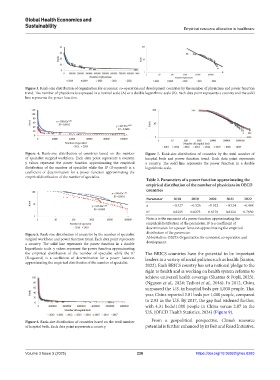
            Figure  4. Rank-size distribution of countries based on the number   Figure  7. Rank-size distribution of countries by the total number of
            of specialist surgical workforce. Each data point represents a country.   hospital beds and power function trend. Each data point represents
            y values represent the  power  function approximating the  empirical   a country. The solid line represents the power function in a double
                                               2
            distribution of the number of specialist while the R  (R-squared) is a   logarithmic scale.
            coefficient of determination for a power function approximating the
            empirical distribution of the number of specialist.
                                                               Table 2. Parameters of a power function approximating the
                                                               empirical distribution of the number of physicians in OECD
                                                               countries
                                                               Parameter   2018   2019    2020   2021    2022
                                                               α          −0.527  −0.526  −0.522  −0.524  −0.488
                                                               R 2         0.8205  0.8273  0.8179  0.8224  0.7930
                                                               Note: α is the exponent of a power function approximating the
                                                               empirical distribution of the parameter; R  is a coefficient of
                                                                                          2
                                                               determination for a power function approximating the empirical
            Figure 5. Rank-size distribution of countries by the number of specialist   distribution of the parameter.
            surgical workforce and power function trend. Each data point represents   Abbreviation: OECD: Organization for economic co-operation and
            a country. The solid line represents the power function in a double   development.
            logarithmic scale. y values represent the power function approximating
            the  empirical  distribution  of  the  number  of  specialist  while  the  R 2   The BRICS countries have the potential to be important
            (R-squared) is a coefficient of determination for a power function   leaders in a variety of social policies such as health (Santos,
            approximating the empirical distribution of the number of specialist.
                                                               2022). Each BRICS country has set a national pledge to the
                                                               right to health and is working on health system reforms to
                                                               achieve universal health coverage (Sharma & Popli, 2023).
                                                               (Nguyen et al., 2024; Tediosi et al., 2016). In 2012, China
                                                               surpassed the U.S. in hospital beds per 1,000 people. That
                                                               year, China reported 3.01 beds per 1,000 people, compared
                                                               to 2.93 in the U.S. By 2017, the gap had widened further,
                                                               with 4.31 beds/1,000 people in China versus 2.87 in the
                                                               U.S. (OECD Health Statistics, 2024) (Figure 9).

            Figure 6. Rank-size distribution of countries based on the total number   From  a  geopolitical  perspective,  China’s  resource
            of hospital beds. Each data point represents a country.  potential is further enhanced by its Belt and Road Initiative,


            Volume 3 Issue 3 (2025)                        238                       https://doi.org/10.36922/ghes.8283

