


Page 77 - GHES-3-3
P. 77
Global Health Economics and
            Sustainability
                                                                                        Pharmaceutical system in Iraq


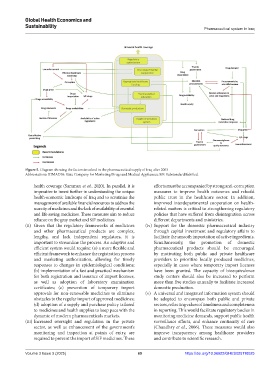
            Figure 5. Diagram showing the factors involved in the pharmaceutical supply of Iraq after 2003
            Abbreviations: KIMADIA: State Company for Marketing Drugs and Medical Appliances; S/F: Substandard/falsified.
               health coverage (Summan et al., 2020). In parallel, it is   efforts must be accompanied by strong anti-corruption
               imperative to invest further in understanding the unique   measures to improve health outcomes and rebuild
               health-economic landscape of Iraq and to scrutinize the   public trust in the healthcare sector. In addition,
               management of available financial resources to address the   improved interdepartmental cooperation on health-
               scarcity of medicines and the lack of availability of essential   related matters is critical to strengthening regulatory
               and life-saving medicines. These measures aim to reduce   policies that have suffered from disintegration across
               reliance on the gray market and S/F medicines.     different departments and ministries.
            (ii)  Given that the regulatory frameworks of medicines   (iv)  Support for the domestic pharmaceutical industry
               and other pharmaceutical products are complex,     through  capital  investment and  regulatory affairs  to
               lengthy, and lack independent regulators, it is    facilitate the smooth importation of active ingredients.
               important to streamline the process. An adaptive and   Simultaneously,  the  promotion  of  domestic
               efficient system would require: (a) a more flexible and   pharmaceutical products should be encouraged
               efficient framework to enhance the registration process   by motivating both public and private healthcare
               and marketing authorization, allowing for timely   providers to prioritize locally produced medicines,
               responses  to  changes  in  epidemiological  conditions;   especially in cases where temporary import licenses
               (b) implementation of a fast and practical mechanism   have been granted. The capacity of bioequivalence
               for both registration and issuance of import licenses,   study centers should also be increased to perform
               as  well  as  adoption of  laboratory examination   more than five studies annually to facilitate increased
               certificates; (c)  prevention of temporary import   domestic production.
               approvals for non-renewable medicines to eliminate   (v)  A universal and integrated information system should
               obstacles to the regular import of approved medicines;   be adopted to encompass both public and private
               (d) adoption of a supply and purchase policy tailored   sectors, reflecting values of timeliness and completeness
               to medicines and health supplies to keep pace with the   in reporting. This would facilitate regulatory bodies in
               dynamic of modern pharmaceuticals markets.         monitoring medicine demands, support public health
            (iii) Increased oversight and  regulation in  the private   surveillance  efforts,  and enhance  continuity of  care
               sector, as well as enhancement of the government’s   (Chaudhry et al., 2006). These measures would also
               monitoring and inspection at points of entry, are   improve  transparency among  healthcare  providers
               required to prevent the import of S/F medicines. These   and contribute to scientific research.


            Volume 3 Issue 3 (2025)                         69                  https://doi.org/10.36922/GHES025110025

