


Page 49 - GPD-2-2
P. 49
Gene & Protein in Disease                               Dunaliella salina & myocardial ischemia-reperfusion injury


                          A


                         B                   C                           D


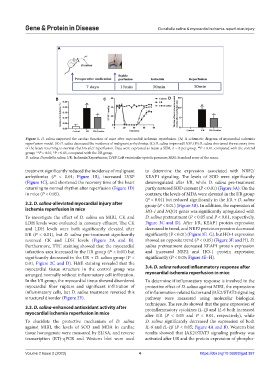
            Figure 1. D. salina improved the cardiac function of mice after myocardial ischemia reperfusion. (A) A schematic diagram of myocardial ischemia
            reperfusion model. (B) D. salina decreased the incidence of malignant arrhythmias. (C) D. salina improved LVSP. (D) D. salina shortened the recovery time
            of the heart returning to normal rhythm after reperfusion. Data were expressed as mean ± SEM, n = 8 per group.  P < 0.01, compared with the control
                                                                                     ##
            group; **P < 0.01, *P < 0.05, compared with the I/R group.
            D. salina: Dunaliella salina; I/R: Ischemia/Reperfusion; LVSP: Left ventricular systolic pressure; SEM: Standard error of the mean.
            treatment significantly reduced the incidence of malignant   to determine the expression associated with NRF2/
            arrhythmias (P < 0.01;  Figure  1B), increased LVSP   KEAP1 signaling. The levels of SOD were significantly
            (Figure 1C), and shortened the recovery time of the heart   downregulated after I/R, while  D. salina pre-treatment
            returning to normal rhythm after reperfusion (Figure 1D)   partly restored SOD content (P < 0.01) (Figure 3A). On the
            in mice (P < 0.05).                                contrary, the levels of MDA were elevated in the I/R group
                                                               (P < 0.01) but reduced significantly in the I/R + D. salina
            3.2. D. salina-alleviated myocardial injury after   group (P < 0.01) (Figure 3B). In addition, the expression of
            ischemia reperfusion in mice                       HO-1 and NQO1 genes was significantly upregulated with
            To investigate the effect of  D.  salina on MIRI, CK and   D. salina pretreatment (P < 0.05 and P < 0.01, respectively,
            LDH levels were evaluated in coronary effluent. The CK   Figure 3C and D). After I/R, KEAP1 protein expression
            and LDH levels were both significantly elevated after   decreased in trend, and NRF2 protein expression decreased
            I/R (P < 0.01), but  D. salina pre-treatment significantly   significantly (P < 0.01) (Figure 3E–G), but HO-1 expression
            reversed CK and LDH levels (Figure  2A  and  B).   showed an opposite trend (P < 0.05) (Figure 3E and H). D.
            Furthermore, TTC staining showed that the myocardial   salina pretreatment decreased KEAP1 protein expression
            infarction area increased in the I/R group (P < 0.01) but   and increased NRF2 and HO-1 protein expression
            significantly decreased in the I/R + D. salina group (P <   significantly (P < 0.05; Figure 3E–H).
            0.01, Figure 2C and D). H&E staining revealed that the
            myocardial tissue structure in the control group was   3.4. D. salina reduced inflammatory response after
            arranged normally without inflammatory cell infiltration.   myocardial ischemia reperfusion in mice
            In the I/R group, the myocardial tissue showed disordered   To determine if inflammatory response is involved in the
            myocardial fiber rupture and significant infiltration of   protective effect of D. salina against MIRI, the expressions
            inflammatory cells, but D. salina treatment reversed this   of inflammation-related factors and JAK2/STAT3 signaling
            structural disorder (Figure 2E).                   pathway were measured using molecular biological
                                                               techniques. The results showed that the gene expression of
            3.3. D. salina-enhanced antioxidant activity after   proinflammatory cytokines IL-1β and IL-6 both increased
            myocardial ischemia reperfusion in mice            after I/R (P < 0.05 and  P < 0.01, respectively), while
            To elucidate the protective mechanism of  D. salina   D. salina significantly decreased the expression of both
            against MIRI,  the  levels of  SOD and MDA  in cardiac   IL-6 and IL-1β (P < 0.05; Figure 4A and B). Western blot
            tissue homogenate were measured by ELISA, and reverse   results showed that JAK2/STAT3 signaling pathway was
            transcription (RT)-qPCR and Western blot were used   activated after I/R and the protein expression of phospho-


            Volume 2 Issue 2 (2023)                         4                         https://doi.org/10.36922/gpd.387

