


Page 51 - GPD-2-2
P. 51
Gene & Protein in Disease                               Dunaliella salina & myocardial ischemia-reperfusion injury


                         A                     B


                         C                        D                  E


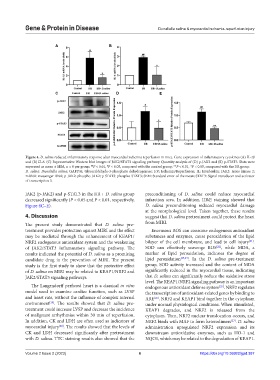
            Figure 4. D. salina reduced inflammatory response after myocardial ischemia reperfusion in mice. Gene expression of inflammatory cytokines (A) IL-1β
            and (B) IL-6. (C) Representative Western blot images of JAK2/STAT3 signaling pathway. Quantity analysis of (D) p-JAK2 and (E) p-STAT3. Data were
                                        ##
            expressed as mean ± SEM, n = 8 per group.  P < 0.01,  P < 0.05, compared with the control group; **P < 0.01, *P < 0.05, compared with the I/R group.
                                               #
            D. salina: Dunaliella salina; GAPDH: Glyceraldehyde-3-phosphate dehydrogenase; I/R: Ischemia/Reperfusion; IL: Interleukin; JAK2: Janus kinase 2;
            mRNA: messenger RNA; p-JAK2: phospho-JAK2; p-STAT3: phospho-STAT3; SEM: Standard error of the mean; STAT3: Signal transducer and activator
            of transcription 3.
            JAK2 (p-JAK2) and p-STAT3 in the I/R + D. salina group   preconditioning of  D. salina could reduce myocardial
            decreased significantly (P < 0.05 and P < 0.01, respectively,   infarction area. In addition, H&E staining showed that
            Figure 4C–E).                                      D. salina preconditioning reduced myocardial damage
                                                               at the morphological level. Taken together, these results
            4. Discussion                                      suggest that D. salina pretreatment could protect the heart

            The  present  study  demonstrated  that  D. salina  pre-  from MIRI.
            treatment provides protection against MIRI and the effect   Enormous ROS can consume endogenous antioxidant
            may be mediated through the enhancement of KEAP1/  substances and enzymes, cause peroxidation of the lipid
                                                                                                           [21]
            NRF2 endogenous antioxidant system and the weakening   bilayer of the cell membrane, and lead to cell injury .
                                                                                             [22]
            of JAK2/STAT3 inflammatory signaling pathway. The   SOD can effectively scavenge ROS , while MDA, a
            results indicated the potential of D. salina as a promising   marker of lipid peroxidation, indicates the degree of
            candidate drug in the prevention of MIRI. The present   lipid peroxidation [23,24] . In the  D. salina pre-treatment
            study is the first study to show that the protective effect   group,  SOD  activity  increased and  the  content  of  MDA
            of D. salina on MIRI may be related to KEAP1/NRF2 and   significantly reduced in the myocardial tissue, indicating
            JAK2/STAT3 signaling pathways.                     that D. salina can significantly reduce the oxidative stress
                                                               level. The KEAP1/NRF2 signaling pathway is an important
              The Langendorff perfused heart is a classical  in vitro   endogenous antioxidant defense system . NRF2 regulates
                                                                                              [25]
            model used to examine cardiac function, such as LVSP   the transcription of antioxidant-related genes by binding to
            and heart rate, without the influence of complex internal   ARE . NRF2 and KEAP1 bind together in the cytoplasm
                                                                   [26]
            environment . The results showed that  D. salina pre-  under normal physiological conditions. When stimulated,
                      [19]
            treatment could increase LVSP and decrease the incidence   KEAP1 degrades, and NRF2 is released from the
            of malignant arrhythmias within 30 min of reperfusion.   cytoplasm. Then, NRF2 nuclear translocation occurs, and
            In addition, CK and LDH are often used as indicators of   NRF2 binds with MAF to form heterodimers . D. salina
                                                                                                   [27]
            myocardial injury . The results showed that the levels of   administration upregulated NRF2 expression and its
                          [20]
            CK and LDH decreased significantly after pretreatment   downstream antioxidative enzymes, such as HO-1 and
            with D. salina. TTC staining results also showed that the   NQO1, which may be related to the degradation of KEAP1.


            Volume 2 Issue 2 (2023)                         6                         https://doi.org/10.36922/gpd.387

