


Page 87 - GPD-2-2
P. 87
Gene & Protein in Disease                                    Verteporfin therapy for triple-negative breast cancer


             A                    B                            reduced YAP expression and  increased  p-YAP  (S127)
                                                               in a dose-dependent manner in both MDA-MB-231
                                                               (Figure  2A  and  B) and SUM159 (Figure  2C  and  D).
                                                               VP-treated cells exhibited nuclear exclusion and increased
                                                               expression of YAP in the cytoplasm in both TNBC cells
                                                               (Figure  2E). Protein expression of downstream target
                                                               molecules of YAP signaling, CTGF, CYR61, and MYC
                                  C                            was significantly decreased with the VP treatment in
                                                               both TNBC cell lines (Figure  2A–D). However, unlike
                                                               the protein expression, no significant changes in the
                                                               mRNA levels of either YAP or TAZ were observed with
                                                               VP (Figure 2F-G). In a dose-dependent manner, mRNA
                                                               expressions of these target molecules were downregulated
                                                               upon VP treatment in MDA-MB-231 (Figure  2H) and
                                                               SUM159 (Figure  2I). For further assessment, we used
                                                               siRNA  for  the  transient  silencing  of  YAP.  Significant
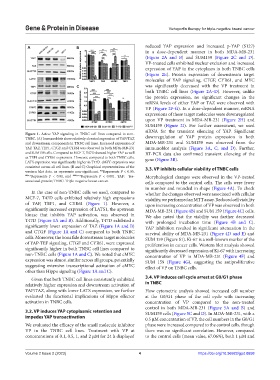
            Figure  1. Active YAP signaling in TNBC cell lines compared to non-
            TNBC. (A) Immunoblots show relatively elevated expression of YAP/TAZ   downregulation of YAP protein expression in both
            and downstream components in TNBC cell lines. Increased expression of   MDA-MB-231 and SUM159 was observed from the
            YAP, TAZ, TEF1, CTGF, and CYR61 was observed in both MDA-MB-231   immunoblot analysis  (Figure  3A,  C,  and  D). Further,
            and SUM159 cells. Compared to MCF-7, T47D showed higher YAP as well   RT-PCR data also confirmed transient silencing of the
            as TEF1 and CYR61 expression. However, compared to both TNBC cells,   gene (Figure 3B).
            LATS expression was significantly higher in T47D. cMYC expression was
            consistent across all cell lines. (B and C) Graphical representations of the   3.3. VP inhibits cellular viability of TNBC cells
            western blot data. ns represents non-significant,  *Represents P < 0.05,
                                            #/
            ##/ **Represents  P  < 0.01, and   ###/ ***Represents  P  <  0.001. YAP:    Yes-  Morphological changes were observed in the VP-treated
            associated protein; TNBC: Triple-negative breast cancer.  cells compared to the control cells. The cells were fewer
                                                               in number and rounded in shape (Figure 4A). To check
              In the case of non-TNBC cells we used, compared to   whether the changes observed were associated with cellular
            MCF-7, T47D cells exhibited relatively high expressions   viability, we performed an MTT assay. Reduced cell viability
            of YAP, TEF1, and CYR61 (Figure  1). However, a    upon increasing concentration of VP was observed in both
            significantly increased expression of LATS1, the upstream   MDA-MB-231 (Figure 4B) and SUM 159 (Figure 4C) cells.
            kinase that inhibits  YAP activation, was observed in   We also noted that the viability was further decreased
            T47D (Figure 1A and B). Additionally, T47D exhibited a   with prolonged incubation time (Figure  4B  and  C).
            significantly lower expression of TAZ (Figure 1A and B)   YAP  inhibition  resulted  in  significant  attenuation  in  the
            and CTGF (Figure 1A and C) compared to both TNBC   survival ability of MDA-MB-231 (Figure 4D and E) and
            cells. Moreover, the bona fide downstream target molecules   SUM 159 (Figure S1). Ki-67 is a well-known marker of the
            of YAP-TEF signaling, CTGF and CYR61, were expressed   proliferation in cancer cells. Western blot analysis showed
            significantly higher in both TNBC cell lines compared to   significantly decreased expression of Ki-67 with increasing
            non-TNBC cells (Figure 1A and C). We noted that cMYC   concentration  of  VP  in  MDA-MB-231  (Figure  4F)  and
            expression was almost similar across all groups, potentially   SUM 159 (Figure  4G), suggesting the antiproliferative
            suggesting extensive transcriptional activation of cMYC   effect of VP on TNBC cells.
            other than Hippo signaling (Figure 1A and C).
              Given that both TNBC cell lines consistently exhibited   3.4. VP induces cell cycle arrest at G0/G1 phase
            relatively higher expression and downstream activation of   in TNBC
            YAP/TAZ, along with lower LATS expression, we further   Flow cytometric analysis showed increased cell number
            evaluated the functional implications of Hippo effector   at the G0/G1 phase of the cell cycle with increasing
            activation in TNBC cells.                          concentration of VP compared to the non-treated
                                                               control in both MDA-MB-231 (Figure  5A  and  B) and
            3.2. VP induces YAP cytoplasmic retention and      SUM159 cells (Figure 5C and D). In MDA-MB-231, with a
            impedes YAP transactivation                        0.5 µM concentration of VP, the cell numbers in the G0/G1

            We evaluated the efficacy of the small molecule inhibitor   phase were increased compared to the control cells, though
            VP  in  the  TNBC  cell  lines.  Treatment  with  VP  at   there was no significant correlation. However, compared
            concentrations of 0.1, 0.5, 1, and 2 µM for 24 h displayed   to the control cells (mean value, 67.06%), both 1 µM and


            Volume 2 Issue 2 (2023)                         4                        https://doi.org/10.36922/gpd.0658

