


Page 89 - GPD-2-2
P. 89
Gene & Protein in Disease                                    Verteporfin therapy for triple-negative breast cancer


            expression of p21 and p27 with reduced Cyclin D1 levels to a   3.5. VP induces cellular apoptosis in TNBC
            significant level with both siYAP-treated (Figure 6A and B)   To determine the antiproliferative effect of VP on apoptosis,
            and VP-treated TNBC cells (Figure 6C and D).       Annexin V-PI apoptosis assay was performed. With an
                                                               increasing concentration of VP, the number of apoptotic
             A                       B                         cells increased in both MDA-MB-231 (Figure 7A and B) and
                                                               SUM159 cells (Figure S1). In the case of MDA-MB-231 cells,
                                                               control  cells  exhibited  an  average  of  92.38%  viability;
                                                               however, with 0.5  µM of VP, live cells were reduced to
                                                               84.07% and further decreased to 41.36% with 2  µM of
                                                               VP. Correspondingly, the total apoptotic cells increased
             C                       D                         in the VP incubated cells from 15.25% (0.5  µM VP) to
                                                               58.32% (2 µM VP). Similarly, YAP silencing also resulted
                                                               in significantly increased apoptotic cells (59.9%) compared
                                                               to the control siRNA (10.58%) (Figure 7C and D). Elevated
                                                               levels of cleaved caspase 3 and cleaved PARP expressions to
                                                               significant levels were observed from the western blot data,
                                                               further substantiating the ability of VP to induce cellular
                                                               apoptosis in TNBC cells (Figure 7E–G). Raw images of all
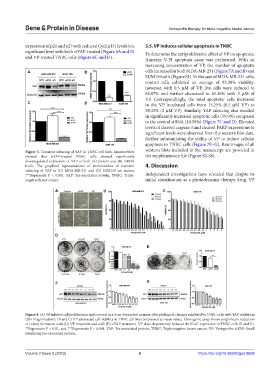
            Figure 3. Transient silencing of YAP in TNBC cell lines. Immunoblots   western blots included in the manuscript are provided in
            showed that siYAP-treated TNBC cells showed significantly   the supplementary file (Figure S2-S8).
            downregulated expression of YAP at both (A) protein and (B) mRNA
            levels. The  graphical representations of immunoblots of transient   4. Discussion
            silencing of YAP in (C) MDA-MB-231 and (D) SUM159 are shown.
            ***Represents  P  <  0.001.  YAP:  Yes-associated  protein;  TNBC:  Triple-  Independent investigations have revealed that despite its
            negative breast cancer.                            initial classification as a photodynamic therapy drug, VP

                         A                   B                        C


                         D

                                                               E


                         F                                     G


            Figure 4. (A) VP inhibits cell proliferation and survival in a dose-dependent manner. Morphological changes exhibited by TNBC cells with YAP inhibition
            (20× magnification). (B and C) VP attenuated cell viability in TNBC cell lines (expressed as mean value). Clonogenic assay shows a significant reduction
            of colony formation with (D) VP treatment and with (E) siYAP treatment. VP dose-dependently reduced the Ki-67 expression in TNBC cells (F and G).
            **Represents P < 0.01, and ***Represents P < 0.001. YAP: Yes-associated protein; TNBC: Triple-negative breast cancer, VP: Verteporfin; siYAP: Small
            interfering yes-associated protein.


            Volume 2 Issue 2 (2023)                         6                        https://doi.org/10.36922/gpd.0658

