


Page 90 - GPD-2-2
P. 90
Gene & Protein in Disease                                    Verteporfin therapy for triple-negative breast cancer


            A                                                                            B


                        C                                          D


            E
                                                                     F


                         G                                           H


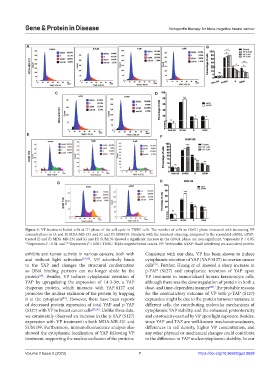
            Figure 5. VP treatment halted cells at G1 phase of the cell cycle in TNBC cells. The number of cells in G0/G1 phase increased with increasing VP
            concentrations in (A and B) MDA-MB-231 and (C and D) SUM159. Similarly, with the transient silencing, compared to the scrambled siRNA, siYAP-
            treated (E and F) MDA-MB-231 and (G and H) SUM159 showed a significant increase in the G0/G1 phase. ns: non-significant, *represents P < 0.05,
            **Represents P < 0.01, and ***Represents P < 0.001. TNBC: Triple-negative breast cancer, VP: Verteporfin; siYAP: Small interfering yes-associated protein.

            exhibits anti-tumor activity in various cancers, both with   Consistent with our data, VP has been shown to induce
            and without light activation [19-25] . VP selectively binds   cytoplasmic retention of YAP (YAP-S127) in ovarian cancer
            to  the  YAP  and  changes  the  structural  conformation   cells . Further, Huang et al. showed a sharp increase in
                                                                  [27]
            so DNA binding partners can no longer abide by the   p-YAP (S127) and cytoplasmic retention of YAP upon
            protein . Besides, VP induces cytoplasmic retention of   VP treatment in immortalized human keratinocyte cells,
                  [18]
            YAP by upregulating the expression of 14-3-3σ, a YAP   although there was the downregulation of protein in both a
            chaperon protein, which interacts with YAP-S127 and   dose- and time-dependent manner . The probable reasons
                                                                                          [28]
            promotes the nuclear exclusion of the protein by trapping   for the contradictory outcome of VP with p-YAP (S127)
            it in the cytoplasm . However, there have been reports   expression might be due to the protein turnover variance in
                           [23]
            of decreased protein expression of total YAP and p-YAP   different cells, the contributing molecular mechanisms of
            (S127) with VP in breast cancer cells [25,26] . Unlike these data,   cytoplasmic YAP stability, and the enhanced proteotoxicity
            we consistently observed an increase in the p-YAP (S127)   and cytotoxicity exerted by VP upon light exposure. Besides,
            expression with VP treatment in both MDA-MB-231 and   since YAP and TAZ are well-known mechanotransducers,
            SUM159. Furthermore, immunofluorescence analysis also   differences in cell density, higher VP concentration, and
            showed the cytoplasmic localization of YAP following VP   any other physical or mechanical changes could contribute
            treatment, supporting the nuclear exclusion of the proteins.   to the difference in YAP nucleocytoplasmic stability. In our


            Volume 2 Issue 2 (2023)                         7                        https://doi.org/10.36922/gpd.0658

