


Page 122 - GPD-3-3
P. 122
Gene & Protein in Disease                                              Hydrogen sulfide ameliorates NAFLD


            2.8. Hydrogen sulfide content assay                Biotechnology Co., LTD, China). Non-specific binding

            Hydrogen sulfide concentration was determined using   was blocked by incubating the membrane with a
            the methylene blue spectrophotometric method. NaHS   solution of 5% milk or BSA in Tris buffer for 4 h. The
            was weighed, and different concentrations of H S were   membrane  was  then  washed  and cut  into  strips  based
                                                    2
            prepared by diluting with NaOH solution. The solution   on the molecular weight of the target proteins. Primary
            was  transferred  to  Eppendorf  tubes  and  mixed  gently.   antibodies were incubated overnight at 4°C, followed
            A color developer mixture was added to each tube, along   by washing with TBST (Beijing Lanjieke Technology
            with diammonium hydrogen phosphate solution, to    Co., LTD, China). The membrane was then incubated
            eliminate  interference. The  tubes  were then centrifuged,   with  secondary  antibodies  for  2  h.  Finally,  enhanced
            and the supernatant was pipetted into a cell culture plate   chemiluminescence imaging was used to visualize the
            for absorbance measurement. A standard curve was plotted   protein bands.
            using the obtained data to calculate the H S concentration   2.10. Transcriptome data
                                             2
            in the samples. 45
                                                               Human NAFLD liver transcriptional data were acquired
            2.9. Western blot                                  from the GEO database.  Bioinformatics tools were used
                                                                                   46
            Liver samples were diced, and proteins were extracted   for analysis, including principal component analysis,
            using  RIPA  lysis buffer  (Beijing Lanjieke  Technology   differential expression analysis, Kyoto Encyclopedia of
            Co., LTD, China) containing inhibitors. Protein    Genes and Genomes pathway enrichment, and Gene
            concentration was measured using a BCA kit (Beijing   Ontology functional enrichment analysis.
            Labgic Technology Co.,  LTD,  China). Sodium dodecyl
            sulfate-polyacrylamide gel electrophoresis (Wuhan   2.11. Statistical analysis
            Xavier Biotechnology Co., LTD, China) was performed   Data from the experiments were analyzed using various
            to separate the proteins, which were then transferred to a   medical statistical analysis software such as Statistical
            polyvinylidene fluoride membrane (Nanjing Nuoweizan   Package for the Social Sciences 26, ImageJ 23, and

            A                                                                    B


                                                                                 C


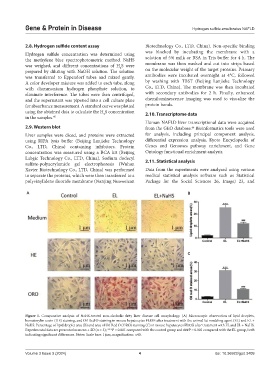
            Figure  1.  Comparative analysis of NaHS-treated non-alcoholic fatty liver disease cell morphology. (A) Microscopic observation of lipid droplets,
            hematoxylin-eosin (HE) staining, and Oil Red O staining in mouse hepatocytes FL83B after treatment with the animal fat modeling agent (EL) and EL +
            NaHS. Percentage of lipid droplet area (B) and area of Oil Red O (ORO) staining (C) in mouse hepatocytes FL83B after treatment with EL and EL + NaHS.
            Experimental data are presented as mean ± SD (n = 3); ***P < 0.001 compared with the control group and ###P < 0.001 compared with the EL group, both
            indicating significant differences. Notes: Scale bars: 1 μm, magnification: ×40.


            Volume 3 Issue 3 (2024)                         4                               doi: 10.36922/gpd.3409

