


Page 35 - GTM-2-2
P. 35
Global Translational Medicine                                           Gut microbiota in Onco-Hematology


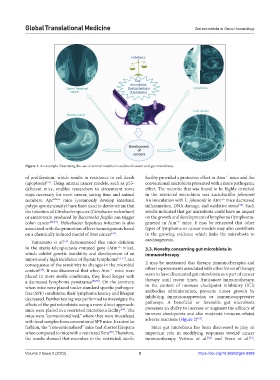
            Figure 1. An example illustrating the use of animal models in studies of cancer and gut microbiota.

                                                                                                 −/−
            of proliferation, which results in resistance to cell death   facility provided a protective effect in Atm  mice and the
                     [51]
            (apoptosis) . Using animal cancer models, such as p53-  conventional microbiota presented with a more pathogenic
            deficient mice, enables researchers to circumvent some   effect. The microbe that was found to be highly enriched
            steps necessary for overt cancer, saving time and animal   in the restricted microbiota was  Lactobacillus johnsonii
            numbers. Apc Min/+   mice  (commonly  develop  intestinal   An inoculation with L. johnsonii in Atm −/−  mice decreased
            polyps spontaneously) have been used to demonstrate that   inflammation, DNA damage, and oxidative stress . Such
                                                                                                      [58]
            the infection of Citrobacter species (Citrobacter rodentium)   results indicated that gut microbiota could have an impact
            or enterotoxin produced by Bacteroides fragilis can trigger   on the growth and development of lymphoma (lymphoma-
                                                                            −/−
            colon cancer [52,53] . Helicobacter hepaticus infection is also   genesis) in Atm  mice. It may be reiterated that other
            associated with the promotion of liver tumorigenesis based   types of lymphoma or cancer models may also contribute
            on a chemically induced model of liver cancer .    to the growing evidence which links the microbiota to
                                                [54]
              Yamamoto  et al.  demonstrated that mice deficient   carcinogenesis.
                            [55]
            in  the ataxia-telangiectasia  mutated gene  (Atm −/−  mice),   3.3. Novelty concerning gut microbiota in
            which exhibit genetic instability and development of an   immunotherapy
            impetuously high incidence of thymic lymphoma [55-57] , as a
            consequence of the sensitivity to changes in the microbial   It may be mentioned that therapy immunotherapies and
            content . It was discovered that when Atm  mice were   other improvements associated with other forms of therapy
                  [58]
                                                −/−
            placed in more sterile conditions, they lived longer with   seem to have discounted gut microbiota as a part of cancer
            a decreased lymphoma penetrance [58,59] . On the contrary,   therapy until recent times. Anticancer immunotherapy,
            when mice were placed under standard specific pathogen-  in the context of immune checkpoint inhibitory (ICI)
            free (SPF) conditions, their lymphoma latency and lifespan   antibodies administration, prevents tumor growth by
            decreased. Further testing was performed to investigate the   inhibiting immunosuppression or immunosuppressive
            effects of the gut microbiota using a more direct approach:   pathways. A  beneficial or favorable gut microbiota
                                                    [60]
            mice were placed in a restricted microbiota facility . The   possesses an ability to increase or augment the efficacy of
            mice were “conventionalized,” where they were inoculated   immune checkpoints and also moderate immune-related
                                                                                     [61]
            with fecal samples from conventional SPF mice. In a similar   adverse reactions (Figure 2) .
            fashion, the “conventionalized” mice had shorter lifespans   Since gut microbiota has been discovered to play an
            when compared to mice with a restricted flora . Therefore,   important role in modifying responses toward cancer
                                               [58]
            the results showed that microbes in the restricted, sterile   immunotherapy Vetizou  et al.  and Sivan  et al. ,
                                                                                                           [63]
                                                                                         [62]
            Volume 2 Issue 2 (2023)                         5                        https://doi.org/10.36922/gtm.0389

