


Page 12 - GTM-3-3
P. 12
Global Translational Medicine                                   Influence of estrogen on RV mitochondria in PH


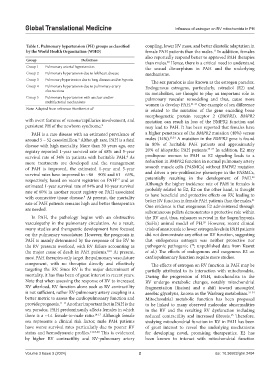
            Table 1. Pulmonary hypertension (PH) groups as classified   coupling, lower RV mass, and better diastolic adaptation in
            by the World Health Organization (WHO)             female PAH patients than the males.  In addition, females
                                                                                            11
                                                               also reportedly respond better to approved PAH therapies
            Group                   Definition                 than males.  Hence, there is a critical need to understand
                                                                        20
            Group 1  Pulmonary arterial hypertension           the sexual dimorphism in PAH and the underlying
            Group 2  Pulmonary hypertension due to left heart disease   mechanisms.
            Group 3  Pulmonary hypertension due to lung diseases and/or hypoxia   The sex paradox is also known as the estrogen paradox.
            Group 4  Pulmonary hypertension due to pulmonary artery   Endogenous estrogens, particularly, estradiol (E2) and
                    obstructions                               its metabolites, are thought to play an important role in
            Group 5  Pulmonary hypertension with unclear and/or   pulmonary vascular remodeling and thus, cause more
                    multifactorial mechanisms
                                                               women to develop PAH. 21-23  One example of sex difference
            Note: Adapted from reference Humbert et al 2       is  related  to  the  mutation  of  the  gene  encoding  bone
                                                               morphogenetic protein receptor 2 (BMPR2).  BMPR2
            with overt features of venous/capillaries involvement, and   mutation can result in loss of the BMPR2 function and
            persistent PH of the newborn syndrome. 2           may lead to PAH. It has been reported that females have
              PAH is a rare disease with an estimated prevalence of   a higher penetrance of the BMPR2 mutation (40%) versus
            around 5 – 52 cases/million.  Although rare, PAH is a fatal   males (14%). 23,24  A mutation in the BMPR2 gene is found
                                  3
            disease with high mortality. More than 30 years ago, one   in 80% of heritable PAH patients and approximately
            registry reported 1-year survival rate of 68% and 5-year   20% of idiopathic PAH patients. 25-27  In addition, E2 may
            survival rate of 34% in patients with heritable PAH.  As   predispose women to PAH as E2 signaling leads to a
                                                       4
            more treatments are developed and the management   reduction in BMPR2 function in normal pulmonary artery
            of PAH is improved, the estimated 1-year and 5-year   smooth muscle cells (PASMCs) without BMPR2 mutation
            survival rates have improved to ~86 – 90% and 61 – 65%,   and drives a pro-proliferative phenotype in the PASMCs,
                                                                                                            28
            respectively, based on recent registries on PAH  and an   potentially resulting in the development of PAH.
                                                  5-7
            estimated 1-year survival rate of 94% and 10-year survival   Although the higher incidence rate of PAH in females is
            rate of 60% in another recent registry on PAH associated   probably related to E2, E2 on the other hand, is thought
            with connective tissue disease.  At present, the mortality   to have beneficial and protective effects on RV, leading to
                                     8
                                                                                                            21
            rate of PAH patients remains high and better therapeutics   better RV function in female PAH patients than the males.
                                                               One evidence is that exogenous E2 administered through
            are needed.
                                                               subcutaneous pellets demonstrates a protective role within
              In PAH, the pathology begins with an obstructive   the RV and, thus, enhances survival in the Sugen/hypoxia
            vasculopathy in the pulmonary circulation. As a result,   (SuHx) animal model of PH.  However, recent clinical
                                                                                       29
            many studies and therapeutic development have focused   trials of anastrozole to lower estrogen levels in PAH patients
            on the pulmonary vasculature. However, the prognosis in   did not demonstrate any effect on RV function, suggesting
            PAH is mainly determined by the response of the RV to   that endogenous estrogen was neither protective nor
            the RV pressure overload, with RV failure accounting as   pathogenic pathogenic ( ; unpublished data from Kawut
                                                                                   30
            the major cause of death in PAH patients.  At present,   et  al.) The effects of endogenous and exogenous E2 on
                                               9,10
            most PAH therapies only target the pulmonary vasculature   cardiopulmonary function require more studies.
            component, with no therapies directly and effectively   The effects of estrogen on RV function in PAH may be
            targeting  the  RV.  Since  RV  is  the  major  determinant  of   partially attributed to its interaction with mitochondria.
            mortality, it has thus been of great interest in recent years.   During the progression of PAH, mitochondria in the
            Note that when assessing the response of RV to increased   RV undergo metabolic changes, notably mitochondrial
            RV afterload, RV function alone such as RV contractility   fragmentation (fission) and a shift toward uncoupled
            is not sufficient, rather RV-pulmonary artery coupling is a   aerobic glycolysis, known as the Warburg metabolism. 31-34
            better metric to assess the cardiopulmonary function and   Mitochondrial metabolic function has been proposed
            provide prognosis. 11-13  Another important fact in PAH is the   to be linked to many observed molecular abnormalities
            sex paradox. PAH predominantly affects females in which   in the RV and the resulting RV dysfunction including
            there is a ~4:1 female-to-male ratio. 14-17  Although female   reduced contractility and increased fibrosis.  Therefore,
                                                                                                   35
            sex represents a clinical risk factor, male PAH patients   studying mitochondrial function in RV in PAH has been
            have worse survival  rates particularly due  to poorer  RV   of great interest to reveal the underlying mechanisms
            status and hemodynamic profiles. 11,18-20  This is evidenced   for developing novel, promising therapeutics. E2 has
            by higher RV contractility and RV-pulmonary artery   been known to interact with mitochondrial function


            Volume 3 Issue 3 (2024)                         2                               doi: 10.36922/gtm.2494

