


Page 14 - GTM-3-3
P. 14
Global Translational Medicine                                   Influence of estrogen on RV mitochondria in PH


            GRP30) (Figure 1). 49,50  ERα and ERβ share a great deal of   4. Influence of estrogen on mitochondrial
            similarities although they have significant differences. ERα   function
            is composed of an amino-terminal transcription control
            domain (AF-1), which is its main region of interaction   E2 affects the mitochondria both indirectly through
            with regulatory binding proteins; however, ERβ does not   targeting the nucleus or directly by regulating the expression
            have a strong AF-1 domain within its amino terminus.    of mitochondrial genes. Both ERα and ERβ have been
                                                         51
            Instead, ERβ contains a repressor domain that modulates   detected within the mitochondria, with ERβ accounting
                                                                                        61,62
            ERα activity.  Meanwhile, GPER is unrelated to the ERs   as the main receptor (Figure 2).   Mitochondrial ERs are
                      51
            but  does  indeed,  mimic  ER  signaling.   ERα  and  ERβ   encoded by the same genes that encode nuclear ERα and
                                            52
            reside in the nucleus, mitochondria, and cytoplasm, 53,54    ERβ as knock-out of ERα and ERβ demonstrates a complete
                                                                                             63
            while GPER is expressed in the plasma membrane as   absence of mitochondrial ER in mice.  The localization of
            well as the endoplasmic reticulum.  Sex differences   these receptors within the mitochondria varies depending
                                           53
            have been detected in ERα protein expression, with ERα   on the cell type. The classical estrogen signaling mechanism
            expression significantly higher in female cardiomyocytes   is when E2 passes through the plasma membrane and
            than in males. Meanwhile, ERβ protein expression in   binds directly with intracellular ERα and ERβ in the
            cardiomyocytes is similar in both males and females. 55,56  cytoplasm (Figure  2). This binding triggers receptor
                                                               phosphorylation and dimerization, in which this newly
              E2 will diffuse into the cell where it will locate the   formed complex translocates into the nucleus where it
            nuclear ER and trigger receptor dimerization. These dimers   binds to the chromatin at ERE sequences, enhancer regions,
            then interact directly with specific DNA sequences, known   and 3’-untranslated regions of target genes (Figure 2). 57,64
            as estrogen response elements (ERE), which transactivate   ERα and ERβ can also be phosphorylated and activated
            gene expression. Alternatively, E2 can interact indirectly   in a ligand-independent manner. 49,57  There are over 70,000
            through the tethering of other DNA transcription factors,   EREs within the mouse and human genomes.  These
                                                                                                       65
            leading to the recruitment of activator proteins. 57,58  GPER   nuclear effects can then influence mitochondrial DNA
            will be activated through the classical G protein-coupled   (mtDNA) gene transcription and function. For instance,
            receptor mechanism. The genomic effects mediated by the   E2 can regulate nuclear respiratory factor 1 (NRF1), which
            ERs (ERα, ERβ) occur over hours to days while the non-  promotes the transcription of mitochondrial transcription
                                                                                                      66
            genomic effects mediated by GPER occur rapidly within   factor A (TFAM) that targets the mtDNA genes.  E2 can
            seconds to minutes. 59,60                          also promote the upregulation of peroxisome proliferator-


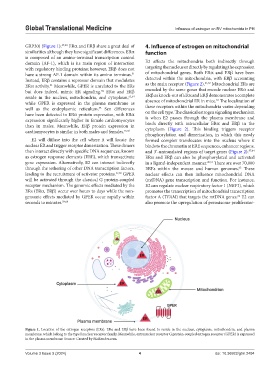
            Figure 1. Location of the estrogen receptors (ERs). ERα and ERβ have been found to reside in the nucleus, cytoplasm, mitochondria, and plasma
            membrane, which belong to the type I nuclear receptor family. Meanwhile, extranuclear receptor G protein-coupled estrogen receptor (GPER) is expressed
            in the plasma membrane. Source: Created by BioRender.com.


            Volume 3 Issue 3 (2024)                         4                               doi: 10.36922/gtm.2494

