


Page 58 - GTM-3-3
P. 58
Global Translational Medicine                                            COVID-19 and acute kidney injury


                                                               3.4. Meta-analysis findings
                           RRT (n)  CRRT (5)  CRRT (7)  N/A  CRRT (4)  CRRT (7)  Our meta-analysis revealed significant associations
                                              Abbreviations: AKI: Acute kidney injury; AKIN: Acute Kidney Injury Network; BUN: Blood urea nitrogen; CRRT: Continuous renal replacement therapy; eGFR: Estimated glomerular filtration
                                                               between COVID-19 and AKI, particularly in relation to
                                                rate; HR: Hazard ratio; KDIGO: Kidney Disease: Improving Global Outcomes; n: Number of patients received RRT; N/A: Not available; OR: Odd ratio; RRT: Renal replacement therapy.
                           D‑dimer  16/30  18/155  512/661  107  128/182  mortality and various clinical parameters.
                                                               3.4.1. High mortality in older male patients
                           eGFR  30/30  N/A  701/701  N/A  N/A  The pooled analysis demonstrates a consistent association
                                                               between older age, male sex, and increased mortality
                                                                                               5-7
                           Hematuria  N/A  N/A  118/442  N/A  71/147  among COVID-19  patients with AKI.  Specifically, a
                                                               study from the United States (US) Department of Veterans
                                                               Affairs highlights that AKI was associated with a higher
                                                               60-day mortality risk for all COVID-19  patients (HR:
                           Proteinuria  N/A  N/A  194/442  N/A  88/147  4.35; CI: 4.23 – 4.50) and hospitalized patients (HR: 2.29;
                                                               CI: 2.19 – 2.40). The main predictors of 60-day mortality
                                                               among AKI patients included the use of vasopressors (HR:

                           BUN  30/160  18/155  701  N/A  59/193  4.32; CI: 4.13 – 4.53), age over 65 (HR: 2.11; CI: 1.98 –
                                                               2.25), and male gender (HR: 1.34; CI: 1.17 – 1.53).
                           Baseline   creatinine  30/30  18/155  36/36  107  43/193  3.4.2. In-hospital mortality in AKI patients
                                                               A large nationwide study conducted among US veterans
                                                               examined the mortality rates of COVID-19-positive
                           AKI  30  7  36  14  55              patients who developed AKI.  The study found that
                                                                                        8
                                                               COVID-19  patients with AKI had significantly elevated
                           AKI‑related   death                 mortality risks compared to those without AKI. Specifically,
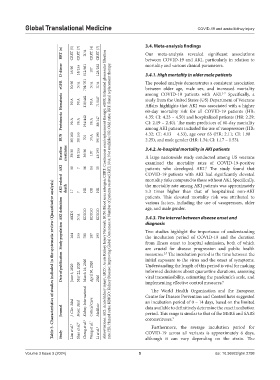
                        Table 3. Characteristics of studies included in the systematic review (Quantitative analysis)
                                                               the mortality rate among AKI patients was approximately
                                           HR
                                      HR
                                                               5.3  times higher than that of hospitalized non-AKI
                                        OR
                                17
                                   7
                                                               patients. This elevated mortality risk was attributed to
                           AKI definition  AKIN  N/A  KDIGO  KDIGO  KDIGO  age, and male gender.
                                                               various factors, including the use of vasopressors, older
                                                               3.4.3. The interval between disease onset and
                           Study population  164  155  701  107  193  diagnosis
                                                               Two studies highlight the importance of understanding
                                                               the  incubation  period  of  COVID-19  and  the  duration
                                                               from illness onset to hospital admission, both of which
                                                               are crucial for disease progression and public health
                           Date of publication  June 3, 2020  May 22, 2020  March 16, 2020  April 30, 2020  2020  measures.  The incubation period is the time between the
                                                                       2,7
                                                               initial exposure to the virus and the onset of symptoms.
                                                               Understanding the length of this period is vital for making
                                                               informed decisions about quarantine durations, assessing
                                                               viral transmissibility, estimating the pandemic’s scale, and
                                                               implementing effective control measures.
                                                                                                9
                                                                 The World Health Organization and the European

                                                               an incubation period of 0 – 14 days, based on the limited
                           Journal  J. Clin. Med  Front. Med  Kidney International  Critical Care  MedRxiv  Centre for Disease Prevention and Control have suggested
                                                               data available to definitively determine the exact incubation
                                                               period. This range is similar to that of the MERS and SARS
                                                               coronaviruses. 9
                                                                 Furthermore, the average incubation period for
                           Study  Lim et al. 5  Shao et al. 6  Cheng et al. 2  Wang et al. 7  Li et al. 8  COVID-19  across all variants is approximately 6  days,
                                                               although it can vary depending on the strain. The


            Volume 3 Issue 3 (2024)                         5                               doi: 10.36922/gtm.2798

