


Page 67 - GTM-3-3
P. 67
Global Translational Medicine                                  Evidence-based approach for TCM development


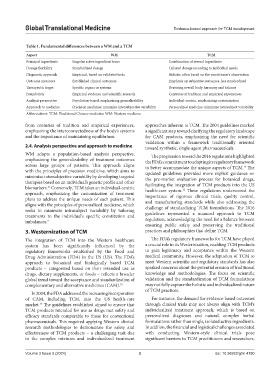
            Table 1. Fundamental differences between a WM and a TCM
            Aspect                              WM                                       TCM
            Principal ingredients  Singular active ingredient focus      Combination of several ingredients
            Dosage flexibility  Standardized dosage                      Tailored dosage according to individual needs
            Diagnostic approach  Empirical, based on validated tools     Holistic, often based on the practitioner’s observation
            Outcome measures    Established clinical outcomes            Emphasis on subjective outcomes, less standardized
            Therapeutic target  Specific organs or systems               Restoring overall body harmony and balance
            Foundation          Empirical evidence and scientific research  Centuries of tradition and empirical experiences
            Analysis perspective  Population-based, emphasizing generalizability  Individual-centric, emphasizing customization
            Approach to medicine  Precision medicine: minimize intersubjective variability  Personalized medicine: minimize intrasubject variability
            Abbreviations: TCM: Traditional Chinese medicine; WM: Western medicine.
            from centuries of tradition and empirical experiences,   approaches inherent to TCM. The 2004 guidelines marked
            emphasizing the interconnectedness of the body’s systems   a significant step toward clarifying the regulatory landscape
            and the importance of maintaining equilibrium.     for  CAM  products,  emphasizing  the  need  for  scientific
                                                               validation within a framework traditionally oriented
            2.4. Analysis perspective and approach to medicine  toward synthetic, single-agent pharmaceuticals.
            WM  adopts  a  population-based  analysis  perspective,   The progression toward the 2016 regulations highlighted
            emphasizing the generalizability of treatment outcomes   the FDA’s commitment to adapting its regulatory framework
            across large groups of patients. This approach aligns   to better accommodate the unique aspects of TCM.  The
                                                                                                         12
            with the principles of precision medicine, which aims to   updated guidelines provided more  explicit  guidance  on
            minimize intersubjective variability by developing targeted   the pre-market evaluation process for botanical drugs,
            therapies based on an individual’s genetic profile and other   facilitating the integration of TCM products into the US
            biomarkers.  Conversely, TCM takes an individual-centric   health-care system.  These regulations underscored the
                     11
                                                                               12
            approach, emphasizing the customization of treatment   importance of rigorous clinical trials, quality control,
            plans to address the unique needs of each patient. This
            aligns with the principles of personalized medicine, which   and manufacturing standards while also addressing the
            seeks to minimize intrasubject variability by tailoring   challenge of standardizing TCM formulations. The 2016
            treatments to the individual’s specific constitution and   guidelines represented a nuanced approach to TCM
            imbalances. 7                                      regulation, acknowledging the need for a balance between
                                                               ensuring public safety and preserving the traditional
            3. Westernization of TCM                           practices and philosophies that define TCM.
            The  integration  of  TCM  into  the  Western  healthcare   The FDA’s regulatory frameworks for TCM have played
            system has been significantly influenced by the    a crucial role in its Westernization, enabling TCM products
            regulatory frameworks established by the Food and   to gain legitimacy and acceptance within the Western
            Drug Administration (FDA) in the US (US). The FDA’s   medical community. However, the adaptation of TCM to
            approach to botanical and biologically based TCM   meet Western scientific and regulatory standards has also
            products – categorized based on their intended use as   sparked concerns about the potential erosion of traditional
            drugs, dietary supplements, or foods – reflects a broader   knowledge and methodologies. The focus on scientific
            global trend toward the acceptance and standardization of   validation and the standardization of TCM formulations
            complementary and alternative medicines (CAM). 12  may not fully capture the holistic and individualized nature
                                                               of TCM practices.
              In 2004, the FDA addressed the increasing incorporation
            of CAM, including TCM, into the US health-care       For instance, the demand for evidence-based outcomes
            market.  The guidelines established aimed to ensure that   through clinical trials may not always align with TCM’s
                  13
            TCM products intended for use as drugs met safety and   individualized treatment approach, which is based on
            efficacy standards comparable to those for conventional   personalized diagnoses and natural, complex herbal
            pharmaceuticals. This required applying Western clinical   formulations rather than single, isolated active ingredients.
            research methodologies to demonstrate the safety and   In addiion, the financial and logistical challenges associated
            effectiveness of TCM products – a challenging task due   with conducting Western-style clinical trials pose
            to the complex mixtures and individualized treatment   significant barriers to TCM practitioners and researchers,


            Volume 3 Issue 3 (2024)                         3                               doi: 10.36922/gtm.4190

